Author: Crpatullo
I'm a Mom of a daughter who needs some direction about what to say to a girl who gets her period for the first time.
Go Scotland!
Scotland Becomes 1st Country To Make Period Products Free
November 25, 20201:29 PM ET


Activists rally outside the Scottish Parliament in Edinburgh in February in support of legislation for free period products. Scotland will make these products free to all who need them after lawmakers unanimously passed a bill that will require tampons and pads to be available in public places.Jeff J Mitchell/Getty Images
Scotland has passed a bill that has made period products such as tampons and pads free to all who need them.
The Period Products (Free Provision) (Scotland) Bill, which passed unanimously, requires local authorities to ensure that period products are generally obtainable free of charge. Schools and colleges must ensure period products are freely available to students, and designated public places must also make the products available.
The Scottish government has estimated the measure will cost 24 million pounds a year – about $32 million.
Scotland Poised To Become 1st Country To Make Period Products Free
Nicola Sturgeon, Scotland’s first minister, cheered the bill’s passage.
“Proud to vote for this groundbreaking legislation, making Scotland the first country in the world to provide free period products for all who need them. An important policy for women and girls,” she wrote on Twitter.
Monica Lennon, who introduced and championed the legislation, thanked those who have campaigned for period dignity and to her colleagues for backing the bill. “A proud day for Scotland and a signal to the world that free universal access to period products can be achieved,” she tweeted.
The debate over the bill spurred what was at times a remarkable public discussion of issues rarely spoken about in government chambers. Members of the Scottish Parliament discussed endometriosis and heavy bleeding, why toilet paper and bins for menstrual products are required in restrooms but not menstrual products themselves, and the wide base of support the legislation had drawn from men as well as women.Article continues after sponsor message
Periods! Why These 8th-Graders Aren’t Afraid To Talk About Them
Two years ago, Scotland began providing free period products in schools, colleges and universities – another first. As NPR reported, that program followed a survey of 2,000 students in Scotland that found 1 in 4 respondents struggled to access sanitary products.
And Scotland has taken pride in blazing this trail.
“That’s right, Scotland has become the first country in the world to make period products free for all,” the country’s official account tweeted. “Because in Scotland, we believe it’s fundamental to dignity, equality and human rights.”https://platform.twitter.com/embed/index.html?dnt=false&embedId=twitter-widget-0&frame=false&hideCard=false&hideThread=false&id=1331576613549584386&lang=en&origin=https%3A%2F%2Fwww.npr.org%2F2020%2F11%2F25%2F938893768%2Fscotland-becomes-first-country-to-make-period-products-free&siteScreenName=NPR&theme=light&widgetsVersion=ed20a2b%3A1601588405575&width=550px
So When You’re Not Getting Your Period
SEXUAL HEALTH IN PREGNANCY

As part of #SexualHealthAwarenessWeek 2020, Hey Girls have collaborated with sex educators from across the UK to promote empowering conversations about sexual health. This blog post was written by Social Enterprise, RISE, a Digital Platform for Women’s Wellbeing.
Pregnancy is very often the product of sex and yet it is something we do not talk openly about enough. Sexual health is always important and pregnancy is no exception. When you book your pregnancy test with your midwife or GP, you will be given information about screening for infectious diseases. This is a blood test which screens for Hepatitis B, HIV and Syphilis which are blood borne infectious diseases, transmitted through unprotected sex (without a condom), through needles, either injecting drugs or tattoos and piercings, if they are not sterilised or at birth. If you are in an at risk group due to your age, have any symptoms or live in an area with high incidence you may be offered screening for Chlamydia and Gonorrhoea too. Screening for genital warts and herpes is not routine but treatment in pregnancy is possible. As with all screening tests and decisions in pregnancy it is your choice whether you wish to have them. Finding out whether you have one or more of these infections is important, as there are potential side effects for you and your baby and effective treatments to prevent these once they are identified.
Hepatitis B
Hepatitis B is an infection of the liver caused by the virus. 9 out of 10 adults with a positive Hepatitis B test will recover fully, with 1 in 10 becoming life-long carriers. If you are a carrier of Hepatitis B in pregnancy, your baby has a chance of being infected at birth. An infected baby has a risk of being a lifelong carrier of Hepatitis B and a 1 in 4 chance of developing a serious liver disease. There is a very effective vaccination which your baby can receive after birth to reduce these risks and prevent them becoming a lifelong carrier.
HIV
HIV (Human Immunodeficiency Virus) is the virus which causes AIDS (Acquired Immune Deficiency Syndrome) and gradually weakens the immune system making it harder to fight infections. All blood donations in the UK are screened for HIV and needles are never reused in healthcare settings. The test screens for HIV antibodies which can take up to 3 months to develop, if you think you are at risk for developing HIV please speak to a healthcare professional. If you have HIV this can be passed to your baby during pregnancy, birth and breastfeeding. There are medications for use in pregnancy which greatly reduce the chance of your baby becoming infected from 1 in 4 (25% to less than 1 in 200 (0.5%). Breastfeeding is not recommended if you are positive for HIV due to transmission risk to your baby, however you can get breastmilk donations if you choose.
Syphilis
Syphilis is the last and least common of the blood borne viruses routinely screened for in pregnancy. Symptoms include small ulcers, sores or growths around the genitals or mouth, a blotchy red rash on the soles of the feet and palms of the hands and general flu signs. If left untreated for a long time (years) syphilis can travel to your brain and cause damage and so is important to get treated quickly. If left untreated in pregnancy it can be passed to the baby, and may cause miscarriage, stillbirth or premature labour. It can be cured with a simple course of antibiotics (typically Penicillin) which will also treat your baby if you are pregnant. Your baby will also be offered a course of treatment after they are born to ensure they are clear of the infection.
Chlamydia and Gonorrhoea
Chlamydia and Gonorrhoea are the two most common sexually transmitted bacterial infections in the UK. They are transmitted through unprotected sex without a condom, contact with another persons genitals, vaginal or seminal fluids or sharing sex toys which are not washed between users. They are not routinely screened for in pregnancy in the UK, but if you are under the age of 25, have had any unusual discharge or bleeding in pregnancy you will be offered screening as part of your care.
Symptoms may include painful urination, bleeding or spotting from the vagina between periods or a change in discharge, but some people will experience no symptoms. All of these symptoms can also be caused by other infections or side effects of pregnancy, it is always important to get them checked out by a healthcare professional. If left untreated the infection can spread to other parts of your body and lead to pelvic inflammatory disease (PID), for men inflammation of the testicles and infertility for women and men. In pregnancy both Chlamydia and Gonorrhoea infections can be passed to your baby in pregnancy and during birth and can cause miscarriage, premature birth, low birth weight and eye and lung infections after they are born. Treatment is very simple and involves antibiotics, tablets for Chlamydia and injection for Gonorrhoea, so don’t worry just get checked.
Genital Warts and Herpes
Genital warts look like little raised painless bumps, herpes look like small sores, both appear on or around your genitals and are transmitted through skin to skin contact with someone who has them. They are not routinely screened for in pregnancy but if you have symptoms or are concerned you have them speak to your midwife. If you have had either of these infections before they can happen again in pregnancy as your immune system changes. Towards the end of your pregnancy it is important to know if you have an active infection as it can change recommendations for your birth. Treatment is safe in pregnancy and can prevent a recurrence close to the birth.
If you are concerned that you may have these or possibly other sexually transmitted infections, it is important to tell your healthcare provider so that you can be tested and get treatment on board if necessary. It is also important to inform people that you have had sexual contact with, so that they can get screening and treatment too.
Unless you are advised by your health team sex is safe in pregnancy and will not affect your baby. Some people find they want to have sex more in pregnancy, some less – however you feel its normal and important to listen to your body. And remember to always practice safe sex!
Another State Pushes For Free Menstrual Product Law
Maryland could be the next state to join the fight against period poverty after a bill was introduced to mandate free menstrual products in public school restrooms.
The bill sent to Maryland’s General Assembly would force every public school to install and maintain stock of menstrual pad and tampon dispensers in at least two restrooms by Oct. 1, 2020, reports WUSA9. If approved, the bill’s requirements would later expand to mandating dispensers in every restroom by Aug. 1, 2024.
The movement to provide free menstrual products in public schools and end taxes on tampons has seen steady growth in recent years. A high profile ruling took place in 2016 when New York became the 11th state to ban taxes on menstrual products. Just weeks later, New York City passed laws requiring all correctional facilities, public schools and shelters to provide free menstrual products.
In 2019, one town in Massachusetts became the first in the United States to require complementary tampons and other menstrual hygiene products in all its public bathrooms.
Brown University became one of the first higher-education institutions to implement a free tampon program following a movement led by its student body president.
For more on how the movement to push free feminine products went mainstream, read this story from Facility Cleaning Decisions.
Yes! This!
Hilary Swank sues SAG-AFTRA health plan after coverage is denied for ovarian cysts: ‘Barbaric’
Taryn RyderWriter, Yahoo EntertainmentSeptember 10, 2020, 12:31 PM EDT Hilary Swank
Hilary Swank is suing the SAG-AFTRA health plan after she was denied coverage for the treatment of ovarian cysts. The Oscar-winning actress spoke out about her decision, slamming the “antiquated” policies that view “the role of women’s organs solely as a means for procreation.”
“I’m truly exhausted by the way women’s ovarian and cyclical health issues continue to be treated by healthcare insurance companies,” the 46-year-old actress began. “I have experienced it in my own life, and I continually read about it across social media and in the press.”
Swank continued, “Their policies are antiquated, barbaric and primarily view the role of women’s organs solely as a means for procreation. My hope is to create change for all woman suffering from women’s health issues that have to battle with insurance companies who diminish the significance of their problems, don’t believe the patient (or their doctor’s) explanations surrounding their suffering, and severely preclude coverage to only incredibly limited services and procedures. It’s painful enough having to deal with the nature of a female health issue, let alone having to wrestle with the stress of trying to get your insurance company to provide the coverage and care that their contract explicitly states they offer.”
Ovarian cysts are fluid-filled sacs or pockets in an ovary or on its surface. According to the Mayo Clinic, a large ovarian cyst can cause pelvic pain a dull or sharp ache in the lower abdomen on the side of the cyst. According to Swank’s lawsuit, which was obtained by People, the board of trustees of the SAG-AFTRA health plan “stopped allowing Swank’s claims for treatment of ovarian cysts” in 2015. She was diagnosed with ovarian cysts in 2008, around the time her “left ovary was destroyed and removed during emergency surgery.”
Swank explained on Instagram she “decided to speak up” after “years of experiencing my own health issues and the ensuing denials from my healthcare company for services that are medically proven to preserve my life, and seeing how expensive this is to support without the help of an insurance company.”
“Based on what I learned, I know that most women can’t afford the medical treatments necessary to cover simple female health issues. I can only assume they either financially deplete their resources, or they forgo the treatments, quietly suffering in pain and risking their lives,” she continued. “ My hope is to be a voice for them.”
The Hunt star said the SAG-AFTRA health plan claims to “treat and protect all of their members equally” but she doesn’t “believe this is true.”
“If you’re a woman suffering from female health issues, I have no doubt you’ll agree with me. If you’re a man, ask your mother, your daughter, your sister, or a girl friend. I already know the answer,” she wrote. “It’s time we are treated fairly.”
New Zealand Providing Free Sanitary Products In Schools
Periods For Special Needs Girls
>How do parents of girls with special needs handle their child’s first period? Please watch this video for some advice:
From Period.com
|


Myths About Menstruation
Myths about menstruation that prevent girls from going to school

The organisation Noble Cup challenges stigmas regarding menstruation in Ethiopia. (Courtesy of Malin Fezehai / Malala Fund)
In ancient Rome, naturalist and philosopher Pliny the Elder wrote that menstruating women have the power to dry out gardens, blunt steel and kill swarms of bees with just one look.
The Mae Enga of New Guinea believed menstrual blood could sicken men if they came in contact with it.
And the Yupiit peoples thought that hunting clothing and equipment could be affected by a menstruating woman’s odour.
While these beliefs (hopefully) seem preposterous now, inaccurate information about menstruation persists to the present day. Not only can these misconceptions put girls in medical danger, but they often prevent them from going to school.
We debunk five current myths about menstruation and highlight how activists and organisations are challenging these beliefs.
Myth: Menstruation is dirty.
Menstrual fluid is made up of blood and tissue, and it is not dirty or harmful. Yet, this belief that periods are unclean is common around the world.
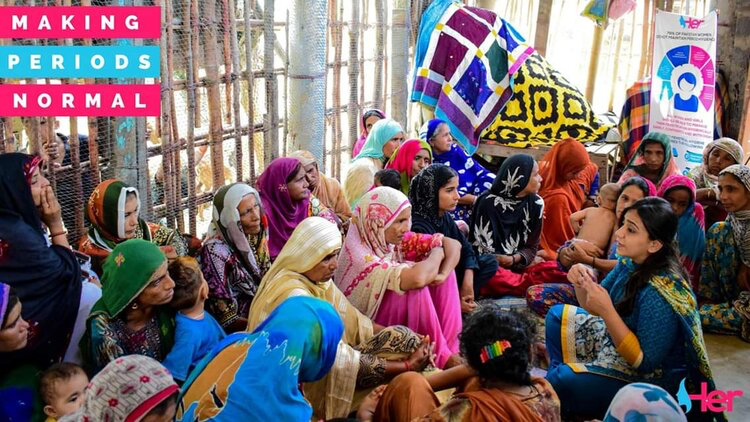
Sana Lokhandwala says that menstruating girls and women in Pakistan are commonly labelled as dirty and are “ostracized in dark places” and “shunned from any human interaction” while on their periods. Forced isolation causes girls to miss class while menstruating.
(Courtesy of Sana Lokhandwala / HER Pakistan)
With her sister Sumaira, Sana founded the organisation HER Pakistan to educate Pakistani girls and women about menstruation. They hold workshops at schools for girls and boys to teach accurate information about this natural bodily function and explain why periods are not unclean. HER Pakistan also helps girls access hygienic and affordable sanitary products in underprivileged communities where girls often use “[r]ags, paper, leaves and even sand” to manage their periods.
“Apart from causing serious diseases, lack of access to hygienic products restricts the mobility of women and girls,” she shares. “Hence, they miss out on school and work.” Sana hopes that by educating communities about menstruation and increasing access to period products through HER Pakistan, she can help girls complete their education.
Myth: Once a girl gets her period, she is ready to get married.
Menstruating for the first time is an important step of puberty, which is when the body starts to change to become more adult. However, menstruation is not an indicator that a girl is ready for marriage. On average, girls first menstruate around 12 years old. Marriage at that age can have devastating consequences for a girl’s health and education.
(Courtesy of Syson Ahabwe / Let Them Help Themselves)
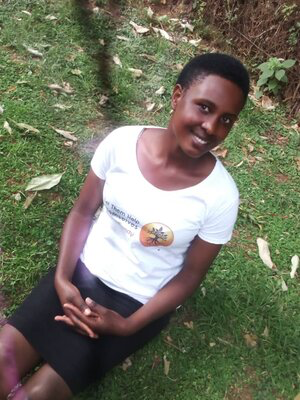
“When a girl gets her first and second period, some parents believe that such a girl is old enough to be married,” says 21-year-old Syson Ahabwe of her Ugandan community. “Indeed, it is not uncommon for girls to be withdrawn from school so that they can be married off.”
As a menstrual hygiene ambassador for the nonprofit Let Them Help Themselves (LTHT), Syson teaches girls in Uganda about their periods and challenges practices like forcing menstruating girls out of school to be married. With LTHT, Syson also addresses other beliefs that limit girls, such as girls on their periods should not be allowed to prepare food, milk cows or share a bed with siblings.
Myth: One in 10 girls in Africa miss school while on their periods.
Organisations frequently use this statistic to raise awareness about menstruation as a barrier to girls’ education — but it doesn’t have a source. Studies for individual countries exist and show that girls do miss school on their periods. However, there hasn’t been a continent-wide study to confirm the extent of the problem. To continue gaining momentum, the menstrual health movement needs recent, large-scale research about the effects of menstruation on school attendance and which solutions are the most effective in addressing these challenges.
“There isn’t enough research yet on the issue to know exactly what combination of support is needed to help girls deal with the onset of menstruation without impacting education,” shares Malala Fund Research and Policy Manager, Lucia Fry.
“There isn’t enough research yet on the issue to know exactly what combination of support is needed to help girls deal with the onset of menstruation without impacting education.”
Myth: Menstruation should be kept a secret.
Did you know there are approximately 800 million girls and women on their periods every day? Half of the female population — approximately 26% of the global population — are of reproductive age. As common as it is, many communities still don’t discuss menstruation openly.
A recent study in Indonesia found that girls believing that menstruation should be kept a secret contributes to the rates of absenteeism in schools. Many migrant and refugee women consider menstruation a shameful topic and subsequently, don’t prepare their daughters for it. Organisations like We Need to Talk in Turkey start conversations with communities that traditionally don’t discuss menstruation and teach girls how to handle this change in their bodies.
(Courtesy of Puja Rai / Visible Impact)
Myth: Girls on their periods should be banished.
Menstruation is a natural process and there is no medical need for girls and women to be confined while on their periods. However, every month, menstruators in certain areas of the world isolate themselves because of stigma.
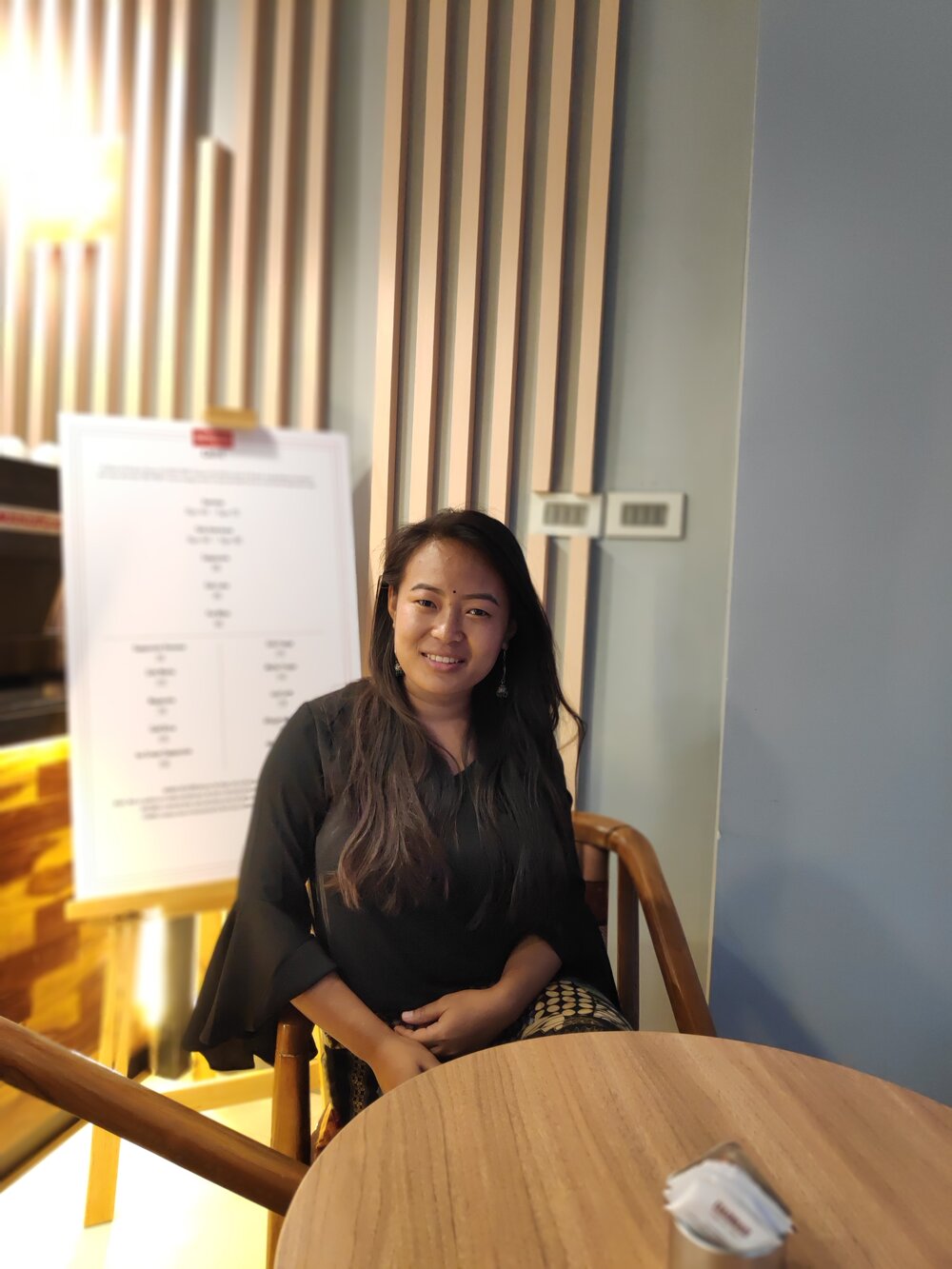
Nepali menstrual advocate Puja Rai explains that chhaupadi, the practice of forcing menstruating girls and women into seclusion, shattered her confidence as a teenager. “I never said how alone or how discriminated and excluded I felt for my so called ‘untouchable sins,’” she remembers. In Nepal, nearly 90% of girls face limited mobility or social exclusion during menstruation.
“Apart from causing serious diseases, lack of access to hygienic products restricts the mobility of women and girls. Hence, they miss out on school and work.”
Similar practices exist in India. 17-year-old student Snigdha shares that in rural areas of her home country, some families “don’t allow menstruating girls to attend school due to stress and discomfort, and there are many more practices where the menstruating girl is isolated in a hut.”
With Visible Impact, Puja conducts school-based workshops for hundreds of girls and boys in Nepal to educate them that menstruation isn’t something shameful. She now proudly embraces her period. “I don’t hesitate to buy sanitary pads that have not been wrapped to hide its identity,” she shares. She hopes that through her work, every girl in Nepal will have the same confidence.
This article is also available in Hindi.
Through Assembly, Malala Fund is helping girls around the world share their stories. Subscribe to receive our newsletter and learn about the next generation of leaders.

ABOUT THE AUTHOR
Tess Thomas is editor of Assembly, a digital publication and newsletter from Malala Fund. She loves books, cats and french fries.
In ancient Rome, naturalist and philosopher Pliny the Elder wrote that menstruating women have the power to dry out gardens, blunt steel and kill swarms of bees with just one look.
The Mae Enga of New Guinea believed menstrual blood could sicken men if they came in contact with it.
And the Yupiit peoples thought that hunting clothing and equipment could be affected by a menstruating woman’s odour.
While these beliefs (hopefully) seem preposterous now, inaccurate information about menstruation persists to the present day. Not only can these misconceptions put girls in medical danger, but they often prevent them from going to school.
We debunk five current myths about menstruation and highlight how activists and organisations are challenging these beliefs.
Myth: Menstruation is dirty.
Menstrual fluid is made up of blood and tissue, and it is not dirty or harmful. Yet, this belief that periods are unclean is common around the world.
Sana Lokhandwala says that menstruating girls and women in Pakistan are commonly labelled as dirty and are “ostracized in dark places” and “shunned from any human interaction” while on their periods. Forced isolation causes girls to miss class while menstruating.
(Courtesy of Sana Lokhandwala / HER Pakistan)
With her sister Sumaira, Sana founded the organisation HER Pakistan to educate Pakistani girls and women about menstruation. They hold workshops at schools for girls and boys to teach accurate information about this natural bodily function and explain why periods are not unclean. HER Pakistan also helps girls access hygienic and affordable sanitary products in underprivileged communities where girls often use “[r]ags, paper, leaves and even sand” to manage their periods.
“Apart from causing serious diseases, lack of access to hygienic products restricts the mobility of women and girls,” she shares. “Hence, they miss out on school and work.” Sana hopes that by educating communities about menstruation and increasing access to period products through HER Pakistan, she can help girls complete their education.
Myth: Once a girl gets her period, she is ready to get married.
Menstruating for the first time is an important step of puberty, which is when the body starts to change to become more adult. However, menstruation is not an indicator that a girl is ready for marriage. On average, girls first menstruate around 12 years old. Marriage at that age can have devastating consequences for a girl’s health and education.
(Courtesy of Syson Ahabwe / Let Them Help Themselves)
“When a girl gets her first and second period, some parents believe that such a girl is old enough to be married,” says 21-year-old Syson Ahabwe of her Ugandan community. “Indeed, it is not uncommon for girls to be withdrawn from school so that they can be married off.”
As a menstrual hygiene ambassador for the nonprofit Let Them Help Themselves (LTHT), Syson teaches girls in Uganda about their periods and challenges practices like forcing menstruating girls out of school to be married. With LTHT, Syson also addresses other beliefs that limit girls, such as girls on their periods should not be allowed to prepare food, milk cows or share a bed with siblings.
Myth: One in 10 girls in Africa miss school while on their periods.
Organisations frequently use this statistic to raise awareness about menstruation as a barrier to girls’ education — but it doesn’t have a source. Studies for individual countries exist and show that girls do miss school on their periods. However, there hasn’t been a continent-wide study to confirm the extent of the problem. To continue gaining momentum, the menstrual health movement needs recent, large-scale research about the effects of menstruation on school attendance and which solutions are the most effective in addressing these challenges.
“There isn’t enough research yet on the issue to know exactly what combination of support is needed to help girls deal with the onset of menstruation without impacting education,” shares Malala Fund Research and Policy Manager, Lucia Fry.
“There isn’t enough research yet on the issue to know exactly what combination of support is needed to help girls deal with the onset of menstruation without impacting education.”
Myth: Menstruation should be kept a secret.
Did you know there are approximately 800 million girls and women on their periods every day? Half of the female population — approximately 26% of the global population — are of reproductive age. As common as it is, many communities still don’t discuss menstruation openly.
A recent study in Indonesia found that girls believing that menstruation should be kept a secret contributes to the rates of absenteeism in schools. Many migrant and refugee women consider menstruation a shameful topic and subsequently, don’t prepare their daughters for it. Organisations like We Need to Talk in Turkey start conversations with communities that traditionally don’t discuss menstruation and teach girls how to handle this change in their bodies.
(Courtesy of Puja Rai / Visible Impact)
Myth: Girls on their periods should be banished.
Menstruation is a natural process and there is no medical need for girls and women to be confined while on their periods. However, every month, menstruators in certain areas of the world isolate themselves because of stigma.
Nepali menstrual advocate Puja Rai explains that chhaupadi, the practice of forcing menstruating girls and women into seclusion, shattered her confidence as a teenager. “I never said how alone or how discriminated and excluded I felt for my so called ‘untouchable sins,’” she remembers. In Nepal, nearly 90% of girls face limited mobility or social exclusion during menstruation.
“Apart from causing serious diseases, lack of access to hygienic products restricts the mobility of women and girls. Hence, they miss out on school and work.”
Similar practices exist in India. 17-year-old student Snigdha shares that in rural areas of her home country, some families “don’t allow menstruating girls to attend school due to stress and discomfort, and there are many more practices where the menstruating girl is isolated in a hut.”
With Visible Impact, Puja conducts school-based workshops for hundreds of girls and boys in Nepal to educate them that menstruation isn’t something shameful. She now proudly embraces her period. “I don’t hesitate to buy sanitary pads that have not been wrapped to hide its identity,” she shares. She hopes that through her work, every girl in Nepal will have the same confidence.
This article is also available in Hindi.
Through Assembly, Malala Fund is helping girls around the world share their stories. Subscribe to receive our newsletter and learn about the next generation of leaders.
ABOUT THE AUTHOR
Tess Thomas is editor of Assembly, a digital publication and newsletter from Malala Fund. She loves books, cats and french fries.
Period Poverty On Upworthy
via YWCA Scotland / Twitter
Period poverty is a big issue that’s seldom discussed. A study of UK girls found that 15% have struggled to afford them and 19% have changed to a less suitable product due to cost.
There is also a real problem with period stigma. A recent study found that 74% of 14 to 21-year-old girls in the UK felt embarrassed buying period products.
That’s why the Scottish Parliament is about to pass a law that would make it the first country in the world to make sanitary products freely available. It will give “anyone who needs them” access to products “relatively easily” with “reasonable privacy.”
It will be a landmark event in the movement to make menstrual hygiene a basic human right.
The Period Products Scotland Bill was proposed by Scottish lawmaker Monica Lennon. “These are not luxury items. They are indeed essential and no one in Scotland should have to go without period products,” Lennon said, adding that the bill was about “period dignity.”
Under the law, products will be made available for free at pharmacies, youth centers, and community centers.
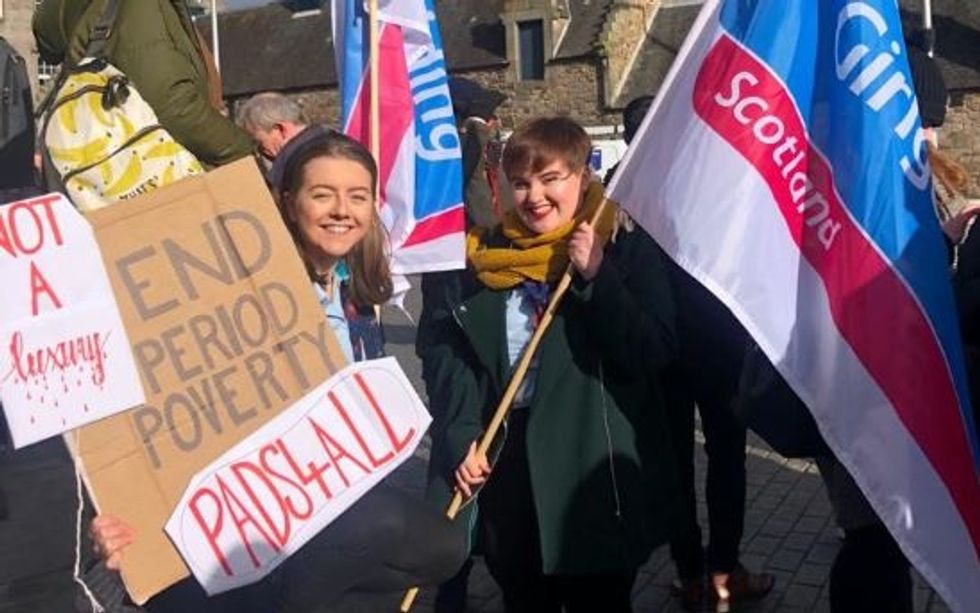
Two years ago, Scotland became the first country to make sanitary products free in all schools, colleges, and universities.
“We will continue our world-leading action promoting wider period dignity through a certification scheme to encourage organizations to provide free products,” Aileen Campbell, Scotland’s communities secretary, said.
Unfortunately, period products in the UK are still subject to a 5% tax. Former prime minister David Cameron was looking into eliminating it but his hands were tied due to European Union rules.
Currently, there are currently 13 countries that do not impose a tax on period products. In the U.S., there are only 15 states where sanitary products are tax-free.
Period poverty is also an issue in the United States although there’s little momentum towards a free-products-for-all program.
Research by The Always Confidence and Puberty Wave VI Survey found that “nearly one in five American girls have either left school early or missed school entirely because they did not have access to period products.”
“The fact that there are people who aren’t able to afford these products, and as a result, may miss school, may miss work, face certain stigma — I think it’s a human rights issue that, especially in the United States of America, women should not have to be dealing with,” said Congresswoman Grace Meng, D-New York.
 What's Your Story?