Tampons are an absolute necessity, especially for young girls who might start their period at school. Many people have argued that sanitary products should be provided by schools free of charge. This would especially help girls in poverty, who are often forced to miss school as a result of their period.
At one middle school, girls are attempting to have access to sanitary products in bathrooms at the school. When the principal was less than receptive to the idea, they came up with a pretty creative form of protest.
“My friend’s 7th grader goes to a school where the kids organized for free tampons in the bathroom,” Ilyse Hogue, president of NARAL Pro-Choice America tweeted. “The male principle said no because they would ‘abuse the privilege.’”
Instead of giving up, the students decided to hold a cookie protest, which included the tampon cookies you can see below. And yes, they look amazing.
ilyse hogue
✔@ilyseh
My friend’s 7th grader goes to a school where the kids organized for free tampons in the bathroom. The male principle said no because they would “abuse the privilege.” The kids decided to stage a cookie protest. Behold the tampon cookies!
The reaction that the cookies had on the principal are unclear, but the people of Twitter absolutely loved the idea.
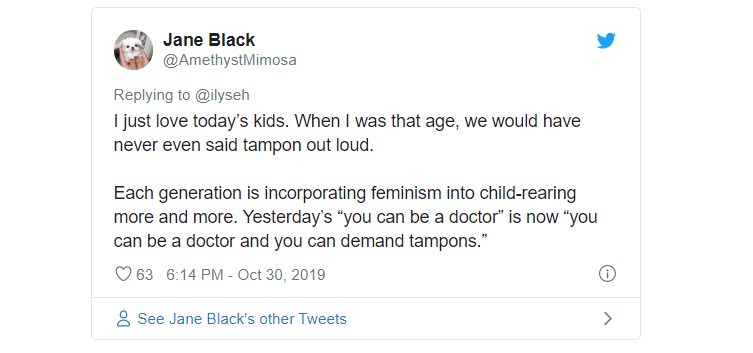
“I just love today’s kids,” one user wrote. “When I was that age, we would have never even said tampon out loud.”
They added: “Each generation is incorporating feminism into child-rearing more and more. Yesterday’s ‘you can be a doctor’ is now ‘you can be a doctor and you can demand tampons.'”
SOURCE: TWITTER
Another added: “She and every girl in the school should rally together and agree that every. single. time. they need a tampon, they should bypass all other adults at school and go ask for one from the principal directly.”
Black, Brown, Bright Red, and More: What Does Each Period Blood Color Mean?
Why period blood varies in color
For most women, menstruation begins between ages 12 and 13. You may bleed in what’s commonly called a “period” every 21 to 35 days or so.
According to the American Academy of Obstetricians and Gynecologists, your period may be used as a vital health sign. Anything from the length of your cycle to the textures and colors you see may indicate something important about your health.
You may see colors of blood ranging from black to bright red, brown to orange. Although most colors can be considered “normal” or “healthy,” others may be reason to see your doctor.
What do the different period blood colors mean?
black
brown
dark red
bright red
pink
orange
gray
fast flow
implantation spotting
✓
✓
✓
✓
✓
infection
✓
✓
✓
✓
lochia
✓
✓
✓
low estrogen
✓
mid-cycle “ovulation” spotting
✓
✓
missed miscarriage
✓
miscarriage
✓
✓
✓
✓
✓
✓
✓
“normal” period
✓
✓
✓
✓
✓
✓
old blood
✓
✓
polyps or fibroids
✓
pregnancy spotting
✓
✓
slow flow
✓
✓
What does black period blood mean?
You may be alarmed to see black blood, but it isn’t necessarily a reason to worry. This color is related to brown blood, which is old blood. It may resemble coffee grounds. Black blood is usually blood that’s taking some extra time to leave the uterus.
What does brown period blood mean?
Brown discharge of all shades is typically a sign of old blood. The blood has had time to oxidize, which is why it’s changed hues from the standard red.
Brown blood is associated with:
The beginning or end of your period
When your flow is slow, the blood may take longer to exit your body. When blood stays in the uterus longer, it may become brown in color. The blood may also be left over from your last period.
Lochia
The bleeding women experience for the first four to six weeks after delivering a baby is called lochia. It starts out relatively heavy. Then from day four onward, lochia may be pinkish or brownish in color.
Pregnancy
If you experience spotting during pregnancy, some of it may be brown if the active bleed has stopped. It’s a good idea to call your doctor regardless.
Missed miscarriage
Although miscarriage may be associated with bright red bleeding, some women may experience what’s called a “missed miscarriage.” With this type of pregnancy loss, the fetus stops developing but doesn’t pass from the uterus for at least 4 weeks. You may not experience heavy bleeding or clots, but some women do develop dark brown spotting or bleeding.
What does dark red period blood mean?
You may see dark red blood upon waking during your period or after you’ve been lying down for a while. The deep color may simply mean that the blood has been sitting in the uterus for a while but hasn’t oxidized to the point of turning brown.
Dark red blood is associated with:
The end of your period
You may also see this color blood toward the end of your normal menstrual period as your flow slows.
Lochia
The bleeding after delivering a baby starts out heavy and may contain clots. It may appear dark red in color for the first three days before changing to different shades and textures. Women who had cesarean sections may only experience this heavy bleeding for the first 24 hours.
What does bright red period blood mean?
Your period may start with bright red bleeding. This means that the blood is fresh and is flowing quickly. Your blood may stay this way your whole period or may darken as your flow slows.
Red blood is associated with:
Infection
Some infections, like chlamydia and gonorrhea, may cause bleeding between periods. If you’re seeing blood before you’re due to start your period, consider contacting your doctor.
Pregnancy
Bleeding during pregnancy of any color may or may not be reason for alarm. Sometimes, however, it’s a sign of miscarriage. Sometimes women have bleeding and go on to deliver healthy babies. Each case is unique. It’s best to check in with your doctor whenever you see blood during pregnancy.
Polyps or fibroids
These noncancerous growths in the uterus may cause heavy flow during your periods or at other times throughout the menstrual cycle. They can be large or small and cause other symptoms like pain and pressure.
What does pink period blood mean?
Your blood may appear pink in color at the beginning or end of your period, especially if you’re spotting. This lighter shade likely indicates that the blood has mixed with your cervical fluid, diluting its hue.
Pink blood is associated with:
Lochia
From day four onward, lochia may be pinkish or brownish in color.
Low estrogen
Sometimes pink menstrual blood may indicate low estrogen levels in the body. Estrogen helps to stabilize the uterine lining. Without this hormone, you may shed the lining at times throughout your cycle — leading to spotting of various colors, including pink. Some causes of low estrogen include being on a hormonal birth control that doesn’t contain estrogen, or perimenopause.
Mid-cycle spotting
You may see this color around ovulation time. Again, when blood from your uterus mixes with clear cervical fluid, it may appear to be light red or pink in color.
Miscarriage
If you’re pregnant, a gush of clear or pink fluid from the vagina may be a sign of miscarriage. Other signs including cramping, passage of tissue, and loss of pregnancy symptoms.
What does orange period blood mean?
When blood mixes with cervical fluid it may also appear orange. As a result, you may see orange discharge for the same reasons you see pink discharge.
Orange blood is associated with:
Implantation spotting
Some women report seeing orange or pink spotting around the time of suspected implantation or 10 to 14 days after conception. Not all women experience implantation spotting, but it can range in color. If you have spotting that doesn’t turn into a period, it’s a good idea to take a pregnancy test.
If you’re pregnant, gray discharge may be a sign of miscarriage. Tissue passing from the vagina may be gray in color as well.
Is it normal for the color to be different at the beginning and end of my period?
Yes! Your period may change colors from the beginning to the middle to the end. You may even have different colors from month to month or at different times throughout your life. There are a number of factors involved, even when your periods are totally “healthy.”
In most cases, the variation from bright red to dark red to brown has something to do with the flow and time the blood has been in the uterus. Your flow may be faster at the beginning of your period and trail off toward the end. You may have dark red blood after laying down for a long time, too. You may see bright red blood on your heaviest days.
This doesn’t mean that all changes in color are normal. If you see a shade that’s unfamiliar or gray — especially if you have other symptoms — there’s no harm in making an appointment to get checked out. And any bleeding during pregnancy is reason to touch base with your doctor.
What if it’s watery or filled with clots?
Besides color, the texture of your blood may change throughout your period. And your periods from month to month may be different textures as well.
Clots aren’t necessarily a reason for concern. They happen as your uterus sheds its lining. Size matters, though. If you see clots that are bigger than a quarter in sizeTrusted Source, you may want to let your doctor know. Same goes with clots that accompany heavy bleeding.
Watery period blood is thin and likely new blood flowing quickly from the uterus. Some women may experience particularly heavy flow, which is called menorrhagia. Clots may or may not accompany the bleeding with this condition. Look out for signs of anemia, like fatigue or shortness of breath.
Blood-tinged discharge that happens around the time of ovulation may be mixed with cervical mucus, giving your blood an egg white or gelatinous texture. This discharge may also be described as wet and slippery.
When to see your doctor
You may see a variety of shades and textures with your periods, even if you’re healthy. If your period is lasting longer than seven days or is very heavy — soaking through a pad or tampon every hour or two — make an appointment with your doctor to rule out certain medical conditions.
Other reasons to make an appointment:
if your cycles are irregular, changing dramatically in length from one month to the next
if your cycles are shorter than 24 or longer than 38 days in length
if you haven’t had a period in three months or longer
if you have considerable pain or other unusual symptoms that accompany your bleeding
If you’re pregnant, talk to your doctor about any bleeding you see. Spotting or bleeding may be a sign of miscarriage. Gray discharge may also indicate miscarriage or even infection, so it’s best to get it checked out, too.
The bottom line
Your period may be used as a vital sign to indicate important things about your health. Young women who have just started their periods may experience great variety in the colors and textures of their menstrual blood for the first several years.
Likewise, women in perimenopause may also experience more irregularity. There are a lot of colors that fall within “normal” or “healthy” ranges, so it’s a good idea to pay attention to changes if they concern you. Always see a doctor if you’re worried or concerned about any changes to your period.
MENSTRUAL LEAVE; WHAT LIES BENEATH… PART 1- ORIGINS
21 August 2019.
In the UK, most employees are lucky enough to have paid sick leave if they are too unwell to work [1]. This includes menstrual cycle-related symptoms. But, in recent years, a specific type of leave known as ‘menstrual leave’ has been held up as a positive development in women’s health and employment rights.
On the face of it, menstrual leave seems like a good idea. It allows individuals to take additional paid or unpaid leave from work, during menstruation. Certainly, many people who menstruate and have had to leave the comfort of their home to go to work, will admit that, on the odd occasion, they would much rather climb back into bed.
This series of five blog posts reveals that menstrual leave is not nearly as beneficial for women as has been suggested. Underneath this policy lie multiple myths about the female body and menstrual health. Sadly, such assumptions reinforce gender inequality by presenting women as more expensive, or less reliable workers.
The good news is that the kind intentions behind menstrual leave could still be realised through other workplace policies (that also benefit male workers). The final blog of the series covers how to make life easier for employees who experience severe menstrual symptoms, without accidentally implying that ‘all women’ require frequent time off work.
Part 1- Menstrual leave, past and present
1920 Soviet Russia propaganda poster. What the October Revolution gave to the female worker and peasant. Menstrual leave only lasted 5 years due to its unpopularity with women workers. Source: Wikimedia
Menstrual leave was first briefly implemented in some factories in Communist Russia after the First World War [2]. The Russian policy was only in use for 5 years in the 1920s- women workers asked for it to be stopped because it wasn’t needed and resulted in employers favouring ‘cheaper’ and ‘more reliable’ male staff (sometimes even sacking female workers and replacing them with men) [2].
Japan made menstrual leave a national policy directly after the Second World War (1947). Indonesia and South Korea (previously part of the Japanese Empire) followed suit in the early 1950s [3].
The timing of these developments is no accident. During wartime, larger numbers of women were employed in factories and jobs previously dominated by men. But, when peace finally came, it was felt that returning soldiers had a greater entitlement to paid employment than women [4]. Plus, significant population loss during the wars also raised concerns about national fertility [3].
The fact that strenuous labour can sometimes cause delayed or absent menstruation was used to argue that some jobs were unfit for women, or that women required one or two days off during menstruation, ‘for the sake of national fertility’ [2 & 3]. [Note- resting during menstruation has absolutely NO EFFECT on fertility.]
Menstrual leave was therefore a type of ‘motherhood’ protectionist policy [4]. In several countries, women were also forced to retire upon marriage and were banned from working night shifts or occupations suddenly deemed too dangerous or unhealthy for them (but somehow not for men, or during wartime!) [3].
Since the 1970s, East Asian menstrual leave policies have been justified on the grounds of providing support to those experiencing severe period pain or heavy bleeding, as opposed to looking out for national fertility [3]. For example, in 2002, Taiwan passed its Gender Employment Act which brought into effect the right for women experiencing severe menstrual symptoms to apply for one day of leave per month (even though this was already covered by sick leave) [5].
The Menstrual Leave Revival
Source: Reuters
So, for most of its history, menstrual leave has been largely an East Asian phenomenon (see map above). But following a highly-publicised report on the use of Indonesian sweatshop labour by NIKE in 2000, the policy attracted global attention [6].
The report uncovered horrendous working conditions, including evidence of women being subject to “intimidating and humiliating physical examinations” in order to claim menstrual leave [6]. [See the third blog in this series for more details].
NIKE’s subsequent ‘code of conduct’ referred to menstrual leave as a local labour policy that was potentially applicable in some of its international factories [7]. This was misinterpreted by the media as a commitment to providing paid leave for all NIKE employees experiencing painful menstruation and calls were made for other companies to follow its example [8]. In reality, it merely endorsed the existing legal entitlements of some of its East Asian factory workers.
In 2010, a researcher campaigned for menstrual leave in Canada, in an effort to reduce the stigma associated with menstruation [9]. Then, in 2013, a Russian nationalist politician advocated for menstrual leave, expressing how deeply distressed he was for the “fair sex”, “most of whom” suffered from pain “often so intense that it is necessary to call an ambulance” [10]. His proposal did not receive government support, since his argument was recognised as being both patronising and untrue.
[Note- Only a small minority of people who menstruate experience severe pain on a regular basis [11]. This is most likely a health condition that requires medical treatment, not a day in agony at home each month!]
In 2015, Zambia became the first and only country outside East Asia to enact a national-level menstrual leave policy [12]. Since then, the governments of Chile and Italy have also considered menstrual leave policy proposals (but have not enacted them) [13].
In 2016, two companies created their own versions of menstrual leave policies (see map above). The term was first co-opted by a small social enterprise in the UK in February 2016, although their policy more closely resembles flexible working practice (for male and female employees) [14]. Then an Australian women’s advocacy organisation followed suit [15]. In 2017, ‘menstrual leave’ was also implemented by a public sector organisation in Mexico [16] and two marketing companies in India, sparking a nation-wide debate [17].
‘Speak no evil monkey’ Emoji Source: Wikimedia
Interestingly, one of the Indian company policies was supposed to have the additional benefit of helping to ‘destigmatise menstruation’ [17]. However, in an apparent contradiction, it was made a blanket policy for ‘all women’ employees (regardless of whether they menstruated or not) so as to spare them (and likely also their employers) the embarrassment of having to mention their periods in the office [17].
Historically, then, menstrual leave originated in concerns about finding jobs for returning soldiers and recovering from population loss in post-conflict states but more recently it has been positioned as beneficial for menstrual heath and gender equality in the workplace.
In part 2 of this series, we will expose the significant gap between the good intentions of menstrual leave policies and the actual experiences of menstruating workers…
What Having “The Talk” With Your Daughter Looks Like in 2019
Your official guide to talking birds and bees.
By Jessica Wakeman
GETTY IMAGES
Discussing the birds and the bees with your daughter is no walk in the park. But thanks to the internet and social media, she’s likely already been consuming messages about sex—both helpful and harmful—for as long as she’s had access to a computer or cell phone.
Not only can your daughter handle honest, forthright communication about sex, experts say she’s eager to learn. Here’s how to talk about sex with your teen, with minimal awkwardness for you both.
When to Start
According to the Guttmacher Institute, 17 is around the age when most young people in the United States have sex for the first time. Therefore, middle school age (before sexual actions may be occurring) is a good time to start talking about safe sex and birth control, says Brittany McBride, MPH, senior program manager of education at Advocates For Youth.
Daughters want to hear from their mothers because if they don’t, sexuality starts to stand out in a shameful way.
Sound early to you? It’s crucial that you are “proactive” when talking about sex rather than “reactive,” says Denise Lewis, health educator for Fairfield Public Schools in Connecticut.
If you’re not engaging in conversations about sex and sexuality with your daughter, the unintended message then becomes that there must be something bad about it, says Joyce McFadden, NCPsyA, author of Modern Mothering. “Daughters want to hear from their mothers because if they don’t, sexuality starts to stand out in a shameful way,” she adds.
Breaking the Ice
Make talking about sex normal. Take some pressure off yourself by peppering smaller “talks” with your daughter throughout her tween and teen years. Instead of throwing a bunch of statistics her way—which will probably just freak you both out— experts suggest threading information about sex and healthy relationships into everyday life.
Try to start a conversation while you’re doing things together, says Lewis, like driving in the car. It’s an ideal time to chat because she literally can’t run away, yet you don’t have to make eye contact.
Have a sense of humor. Talking about sex doesn’t always have to be super serious. “These are conversations that are human and sometimes they’re funny,” McBride says.
It helps to acknowledge head-on that “you don’t want [talking about sex] to be awkward,” Lewis says. “Just say, as you’re having this conversation, ‘We’re going to make this as comfortable and fun as possible.’”
Diving In
Ask open-ended questions. Direct questions with a yes or no answer, like “Are you sexually active?”,can put your daughter on the defensive. But a question like “Can you tell me about your relationship with so-and-so?” will likely tell you more about what’s going on, Lewis says.
If she comes to you with a specific problem, McFadden suggests responses like, “What do you think you’d like to do here?”, “How can I be of help?”, or “Let’s think this through together.”
We don’t want our kids to ever think that we are shaming them.
This method can also help you gauge your daughter’s level of understanding. Start by asking what she and her peers already know, with questions like, “What do you know about that topic?” or “What do your friends think about it?”.
Be affirmative and honest. “Always, always affirm your young people,” McBride says. “They’re trying to make sure that they’re normal.” And above all, listen, don’t lecture.
“We don’t want our kids to ever think that we are shaming them,” Lewis says. It’s important to emphasize that any question is OK, because the answer should come from someone like the parent, not from Google.
Be mindful of your reactions. If you have a tendency to not think before you speak, be extra careful about what comes out of your mouth, says McBride. That self-management goes double, she adds, if you have very expressive facial reactions.
What to Cover
For starters, the basics (i.e. birth control, STDs, safe sex), which you can find resources on through organizations such as Planned Parenthood. But consent and healthy relationships are two more subjects you shouldn’t skip.
Talk about consent. Instead of framing a conversation as how not to be sexually assaulted, a helpful way to talk about consent is to describe the affirming, positive feelings she should have during a romantic encounter.
Elaborate how you want to make sure she feels safe and comfortable.
You can start by telling her “This is what I wish for you,” McFadden says. “Then, elaborate how you want to make sure she feels safe and comfortable, that anything she engages in sexually—even if it’s just holding hands—feels reciprocal to her, and that she doesn’t feel pressured or coerced.”
Give examples of healthy, and unhealthy, relationships. This is crucial to ensuring your daughter is equipped to recognize abusive or manipulative characteristics in a potential partner.
New Hampshire Gov. Chris Sununu (R) signed a bill into law on Wednesday that requires all public schools to provide free tampons and pads to students.
“This legislation is about equality and dignity,” Sununu tweeted. “SB 142 will help ensure young women in New Hampshire public schools will have the freedom to learn without disruption ― and free of shame, or fear of stigma.”
REAL LIFE. REAL NEWS. REAL VOICES.
Help us tell more of the stories that matter from voices that too often remain unheard.
The legislation, also known as the period poverty bill, requires menstrual products to be provided in all female and gender-neutral bathrooms in public middle and high schools across the state.
Democratic state Rep. Polly Campion, a co-sponsor of the bill, called the legislation an “essential measure for equality” in a Wednesday statement.
“Being an adolescent middle or high-schooler is hard enough without the fear and embarrassment of lacking proper care products during the school-day because you cannot afford them,” she said. ”… Providing access to free menstrual care products in public middle and high school bathrooms is not idealistic, it’s a basic, essential measure for equality and is long overdue.”
The bill was spearheaded by New Hampshire high school senior Caroline Dillon after she learned about how many people are forced to miss school or work because they can’t afford pads and tampons. Dillon, who worked with Democratic state Sen. Martha Hennessey to draft the measure in March, testified in front of the state Senate’s Education and Workforce Development Committee in February.
“It was sad to think about,” Dillon said during the committee hearing, the Concord Monitor reported. “Girls in middle and high school would never dream of telling somebody that they have to miss school or use socks because they can’t pay for pads.”
Hennessey thanked Dillon for all of her hard work on the bill in a Wednesday statement.
“I am grateful for the hard work of high school student Caroline Dillon, whose advocacy brought this issue to light,” she wrote. “Today’s step forward to address period poverty in New Hampshire would not have been possible without her.
Last month, Boston Mayor Marty Walsh (D) announced that the city would provide free menstrual products in all public middle and high schools. New York and Illinois are among other states that also provide free tampons and pads to students in public schools
Would you be startled if your daughter came home from school talking about her vulva? Sex educators — including sex-abuse prevention educators — hope that she will. In fact, many experts argue that there are plenty of good reasons to teach young children accurate terminology for their genitals rather than euphemisms or colloquialisms.
As Laura Palumbo, a prevention specialist with the National Sexual Violence Resource Center, points out, “teaching children anatomically correct terms, age-appropriately, promotes positive body image, self confidence, and parent-child communication; discourages perpetrators; and, in the event of abuse, helps children and adults navigate the disclosure and forensic interview process.” However, people who use these terms often get pushback: everything from parents filing complaints against teachers to politicians getting banned from their state house floor. In The Atlantic, writer Catherine Buni talked to front-line educators as well as psychology researchers to hear why anatomical terminology is important for kids to learn from a young age.
Dr. Anthony Rizzuto, the child psychologist who oversaw the implementation of prevention education in Catholic schools and parishes in Boston, says that he saw the difference in kids’ comfort levels after students started learning anatomically correct terms. This was especially true when it came to “children who were self-disclosing” — in other words, kids who reached out to say that they needed help. “The children came to learn that school and church was a safe environment to disclose and that if they chose to do that, people around them would know what to do to make it stop,” he says. “Children got comfortable, and started coming to teachers and parents.”
As Buni says, “Educators… want children to understand that their “private parts” are just that — private and off limits to others. But they also want students to be comfortable talking about these body parts, and with the words that describe them…. When officials pull a teacher into an investigation or escort a legislator from her state house floor for using the word “vagina,” or a parent removes a child from a class that uses the word “penis,” children are more likely to think their questions will get them in trouble, she says. This shuts down communication, reinforcing the culture of secrets and silence perpetrators rely on for cover.”
“We don’t want kids to think they’re going to get in trouble by asking questions about sexual matters and health,” explains Palumbo. This helps kids who “have important health questions or an experience they’re concerned about talk with adults about their concerns.” Our communities, including parents, educators, and the general public, have to work together to create an environment that is open to discussing these issues, and that includes ensuring that we become comfortable with terms like penis, vulva, anus, and more. “We need all adults to be partners in teaching healthy childhood sexual development,” Palumbo concludes, and “square one is body parts.”
One in Ten Girls is Catcalled Before Her 11th Birthday. Here Are 6 Things Parents Can Do About It
In a perfect world, catcalling and other forms of harassment simply wouldn’t exist. But the truth is, our world is far from perfect. Not only do fully-grown women face creepy comments and unwanted attention on a regular basis, but young girls—like your daughter—do, too.
Two years ago, a study showed that one in ten American girls had been catcalled before her 11thbirthday. That’s right, we’re talking about fourth graders getting wolf-whistled and potentially worse. And now, a 2017 report shows more than one in six girls in elementary and secondary school have dealt with gender-based harassment.
Why is this such a big deal? Let us count the ways. First of all, according to Girl Scouts’ Developmental Psychologist, Dr. Andrea Bastiani Archibald, “catcalling and other objectifying behaviors can make girls feel their value lies solely in how theylookas opposed to what they think or the things they can accomplish. That kicks off a domino effect of girls engaging in self-objectifying—feeling overly concerned about how they look, comparing their bodies to those of other girls and women, and even judging other girls based on their looks.” Catcalling can also make girls feel ashamed of their bodies or threatened, like they have to be extra cautious when out in public. None of these are things thatanyoneshould have to spend time and energy thinking about—let alone an 11-year-old girl.
Further, studies have shown that young women perform significantly worse at math after being objectified by a member of the opposite sex. That is, in a controlled study, when females were leered at by a male actor posing as a peer and then took a math test, they got far fewer answers correct compared to women who had not first experienced the objectifying, sexualized stare. Perhaps we should add that to the reason why girls and women are still in the minority in so many STEM fields?
Finally, all these “little” comments about girls’ and women’s bodies contribute to a culture in which the female body is seen as up for grabs—both literally and figuratively. When fast and loose “locker room talk” about girl’s bodies is deemed acceptable or at least harmless, boundaries start to blur farther, putting girls at risk of dealing with aggressive physical behaviors in addition to the verbal taunts. Case in point? A recent study showed that more than one in five girls aged 14-18 have beenkissed or touchedwithout their consent.
“Beyond setting the damaging standard that girls and women are worth little more than the physical bodies they have to offer, when we simply dismiss catcalling as “boys being boys” or “men being men,” it actually confuses boys—making them think masculinity and aggression go hand-in-hand—and gives a bad name to all men, many of whom both admire and respect women,” says Dr. Bastiani Archibald.
Essentially, catcalling is harmful, scary, and it could behappening to your daughter—or at least one of her friends. That said, the last thing you as a parent should do when it comes to all of this is to pretend it’s not happening. Yes, these may not be the most comfortable topics to think about or discuss, but “sheltering” your girl from these real truths can actually put her at even more risk. So here are 6 things you can (and really should) do to help protect your daughter and fight back against these sexist behaviors:
1. Point out pop-culture sexism
One of the easiest ways to broach the topic of catcalling and sexual harassment is to point it out on TV shows, in movies, and in real life. When you witness catcalling or other sexual intimidation (and sadly, you won’t have to look hard to find it), raise the interaction to your daughter and tell her why it was inappropriate and unacceptable. Since sexist remarks and catcalls are often used as a punch-line in pop-culture, make sure to talk about why these behaviors aren’t funny at all. Ask your daughter how she feels about the exchange in question, and whether anything like that has ever happened to her.
2. Get talking
Catcalling and sexual harassment may seem like very grown-up topics, but many girls are targeted in this way while they’re still in elementary school—and onlytwo percentof girls ever tell their parents when it’s happened to them. That’s why it’s important to start the conversation early—think, third or fourth grade—to let your daughter know it’s a topic she should feel comfortable bringing to you.
3. Let her know it’s never, ever her “fault”
When you talk about catcalling and other gender-based harassment, emphasize that no girl or woman is ever “asking for” or “doing anything to deserve” an objectifying comment or threats. Girls and women should feel free—just as boys and men do!—to go where they want, when they want, wearing what makes them comfortable, without fear of intimidation or abuse. Sadly, many girls and women of all ages blame themselves when they’re harassed, so make sure she knows that unwanted attention in the form of prolonged stares, lewd comments, or touching of any kind without her express consent is never, ever her fault—and not something she should feel ashamed telling you or another adult about.
4. Arm her with what to say and do
Knowing how to react to catcalling can be confusing—especially to girls who have been raised to always be polite, especially to adults, and who are surrounded by a society that emphasizes the importance of being pretty and attractive to the opposite sex.
Emphasize that since catcalling itself is theoppositeof polite, there’s no need to smile, laugh, or engage in conversation with the harasser. In fact, make sure she knows that smiling, laughing, or chatting with someone who makes lewd comments can unintentionally encourage more of the same kind of behavior and even put her in danger. Help your daughter to follow this rule of thumb: If an adult is making her feel uncomfortable or acting inappropriately, she should get away from that person as soon as possible and immediately tell you or another caring adult about what happened.
Meanwhile, if another kid at school or in an extra-curricular activity is making her feel uncomfortable with catcalls or other forms of sexual harassment, she can either walk away and tell an adult, or, if she feels safe enough to do so, explain to the other child that such actions aren’t okay, and that they need to stop. Still, if that behavior continues, your daughter will need to tell a trusted adult—not just to help herself out of a tough situation, but because the harasser could be doing the same or worse to other girls who might not have the strength to speak out about it.
5. Talk to boys and young men in your life
If you have sons or other young men in your life, have conversations about catcalling and sexual harassment with them, too. Using pop-culture or events in real life or on the news is always a solid way to introduce the topic. Let them know these kinds of behaviors are never OK, and why they’re damaging to people of both genders. Then, ask him why he thinks other boys and men behave this way. Discuss ways that he can help fight back against the catcalling culture—whether it’s standing in solidarity with girls and women when he sees them being targeted in real life, refusing to laugh at sexist jokes, or calling out his friends if he sees them engaging in sexist behavior. We all have to stand together if we want to create a better, safer, and healthier world.
6. Take action
If you think this is a big problem in your community—as it is in many communities, sadly—you might want to consider getting more involved. Talk to your daughter’s teachers and other school administrators about planning an assembly or other student (or parent-student) event to address the pressures put onbothgenders to fit certain stereotypes, and why and how those stereotypes can lead to damaging behaviors like catcalling and other kinds of gender-based harassment.
While we can’t flip a switch and create a harassment-free world for our girls, we do know that ignoring catcalling or laughing it off contributes to a culture where such behavior is seen as normal and even acceptable. Your daughter—and all of us—deserve better than that.
When most women think of the word “puberty,” we consider our first menstrual cycle, which probably began somewhere around the age of 12 or 13. We might smile to ourselves as we recall tearing through Are You There God? It’s Me, Margaret? before discussing it urgently with our girlfriends after school. We might even laugh a little about how freaked out we were over those first sprouting hairs under our armpits and “down there.”
But puberty is changing for a segment of American girls, who may be nowhere near emotionally ready for bras, feminine hygiene products, or Spin the Bottle. And, it goes without saying, neither are their parents. That’s because these girls are as young as 7 and in second grade.
Puberty in girls is not, as many people believe, the age when menstruation first starts. According to Louise Greenspan, MD, and Julianna Deardorff, PhD, co-authors of The New Puberty: How to Navigate Early Development in Today’s Girls, the initial stages of puberty start with the first signs of breast development and pubic hair, which both generally appear a few years before menses starts.
FEATURED VIDEO
In the past, only 5% of U.S. girls were believed to be experiencing precocious puberty, defined as the onset of breast and hair development in girls age 7 or younger. Their research indicates the figure is now closer to 15%, with a 27% showing breast development by age 8. Similarly, public hair is now appearing in 19% of American girls by age 8.
No one is exactly sure why precocious puberty in girls is on the rise. Higher obesity rates may be partially to blame. Exposure to estrogen and hormone-mimicking chemicals in plastics may also trigger early-onset development in girls. The use of antibiotics in animals in the food supply is also suspect. And race and genetics may play a factor, too, with African American girls showing higher rates of early puberty than their Hispanic, White, and Asian peers. Still, all these groups are showing earlier onsets of puberty. There doesn’t seem to be a single cause for the trend.
With approximately a quarter of American second- and third-grade girls now facing some kind of early development, parents should pay close attention to what their young daughters may be physically experiencing. WebMD recommends the following:
Watch what your child is eating.
Our fat cells make leptin, a protein that plays a key role in appetite and reproduction. Girls who have high leptin levels from being overweight may be more prone to early puberty. If your daughter is overweight, frame your dietary concerns about improving her health, not how much she weighs or her developing breasts.
Encourage plenty of exercise, and be a good example.
Kids do as they see you do. So help keep your daughter’s weight at a healthy level by joining her as she runs in the yard or hits the soccer pitch. Model what it is to be an active female.
Don’t confuse sexuality with puberty.
If your daughter is developing early, she’s likely to be self-conscious about her body. Don’t confuse her further by thinking she’s ready to discuss what a teen or ‘tween can handle—like dating or boys. And avoid teasing remarks about her changing body at all costs.
Build a healthy body image for your daughter, no matter when puberty hits.
Some girls are curvy. Some stick straight. Most fall are in between. As your daughter’s budding figure grows and changes, encourage her to appreciate it for its strength and abilities.
Talk to your pediatrician, and ask if you need to see a pediatric endocrinologist.
Your doctor may measure your daughter’s hormone levels and bone growth. If your child is maturing too early, your doctor may also recommend medications that block sex hormones to prevent further development, and he or she may refer you to a pediatric endocrinologist for further testing.
Try not to worry.
As her parent you may be a nervous wreck, worried about how your daughter will handle the physical changes coming her way at such a young age. With your loving support, chances are she’ll do just fine.

 ilyse hogue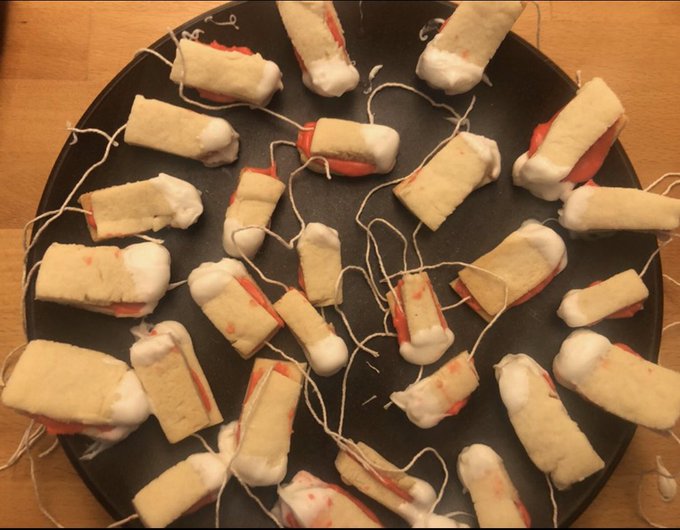








 What's Your Story?