What I Want My Daughter To Know About Her Vagina

UBERIMAGES / GETTY

Dear Daughter,

It’s not a hoo-haa. It’s not a puffle or a daisy or a “down there.” It’s not your other butt or your looloo. It’s your vagina. Kid, I brought your vagina into this world—I’m not going to marginalize its importance by calling it your pookie place.

Sweetheart, the reality is, your vagina is the least interesting part of your sexual and reproductive organs, so let’s not give it so much power over us that we can’t even call it by its given name. If you ask me to discuss your clitoris at length, I’ll have much greater reason to blush. A vagina is just a canal, and in this metaphor, the clitoris is the singing gondolier.

It’s the gondolier that can get you into trouble.

“But Mooooom,” you may say. “My other friends have fluffies and pinkies. Vaginas are soooo embarrassing!” And I’ll say, “Honey, your other friends are going to go to college someday, or the backseat of their high school crush’s car, and they are going to find their fluffies up against a stiff peeper (or another fluffy) and the kind of person who is ready to have the very adult act of coitus, should be able to say: ‘This is my vagina you’re trying to thrust your penis into. Should you do so while we are not protected by prophylactics like condoms with spermicidal lubricants, we could, at best, create a new life that will require us to care for it, putting aside or on hold all of our own plans. Or, we will agonize over whether to put that life—that baby—up for adoption or to abort it, both choices that will forever change the way we think of ourselves. Barring babies, we could end up with a sexually transmitted disease, potentially terminal.’”

That kind of frank discussion never happens when a boy wants to put his wiener in your front buns. I promise you this, in the history of procreation, never have a synonym for a hot dog and a woefully mis-mapped anus produced offspring nor spread STDs. There are no STD hot dogs. But penises and vaginas (lead by that serenading little gondolier, the clitoris) are responsible for lots of both.

So, my gift to you as you are on the brink of adulthood is your vagina. Your cervix and labia and ovaries, too. The whole package, really. Your perineum and your clitoral hood and even your areolae.

But I’m not really giving you vaginas and vulvas and fallopian tubes. I’m trying to give you ownership of yourself. I’m trying—I’ve been trying since you were a little girl and asked me the names for your body parts—to give you the truth. If I can’t tell you about your pubic area without resorting to pet names, how will I tell you about failure and triumph and rejection and resilience? All of those are measurably more difficult to talk about and survive than having a vagina.

I’m giving you truth. I’m trying to be honest about the human condition at large, from your crotch to marriage. For example, marriage can include fighting and forgiving, but the ones that fail often only have one or the other.

Also, people die, even the good ones.

Giving birth is messy and scary and powerful.

Sometimes love is a choice, yes, even loving your child.

Sex should be good in every aspect. Good sex will build you up, never bring you down.

You should know that there are very few answers to your questions that will still satisfy you as the years pass.

You should know that your life will change and, in the most tedious ways, never change at all.

I hope you realize by now that sometimes things that are good for you, like getting all those shots as a child, will hurt or make you uncomfortable, but the benefit is often worth the pain. Ditto mammograms and breakups and regular cardio and broccoli.

Truth doesn’t actually hurt, as the saying goes, it’s finally realizing that you’ve been lied to that hurts.

Though it’s a blow, comparing yourself to someone else and finding yourself lacking is infinitely more educational than feeling superior.

Pets are a commitment you make to another living creature, not a hobby.

Buy the cute shoes and find a place to wear them.

Never ignore debt, road signs, or rectal bleeding.

Try foods you don’t think you’d like.

Get in the picture once in a while. Someone is going to want to look at your lovely face when you’re no longer with them.

Learn to recognize your own ignorance.

It’s your vagina.

I could go on, but the point was to prepare you to learn these things for yourself. I’m trying to teach you that the world you’re inheriting is governed by adults, not children. You’ll be responsible for your part in it soon enough, even if I will frequently remind you that you were once my baby.

But know that none of these adults have nu-nus in their panties.

So we’ll talk about testicles and nipples and why men need one and don’t seem to need the other. You need to know all of thisnow because someday it will just be you and your vagina, figuring things out on your own. Because I can’t and won’t and don’t want to hold you forever in my arms shielded and sheltered by swaddling cloths and euphemisms. I want to watch you fly away someday. Fly long, and far, and wide. And I want you to know exactly where you’re headed.

Mom

Woman Smears Menstrual Blood Across Face, Shows Periods Are ‘Beautiful And Powerful’

Woman Smears Menstrual Blood Across Face, Shows Periods Are ‘Beautiful And Powerful’

Because menstruation is so deeply stigmatized, Demetra Nyx from California is looking to start the dialog about periods and empower menstruators everywhere.

Menstruation has been stigmatized for decades now, forcing menstruators to be ashamed of a completely natural process. From the first period until menopause, those who menstruate spend their lives hiding the fact that they have a period. Whether it’s hiding tampons or pads in pockets or handbags when going to the washroom or experiencing serious anxiety about bleeding through their clothes, menstruators have been taught to hide any sign of their periods. Though society is moving towards talking about menstruation more openly, there is still a lot of work to be done. Sex coach Demetra Nyx from California is helping build a more open dialog about periods through a unique form of activism on social media platform Instagram — posting photos of her face smeared over with menstrual blood.

Nyx is hoping to erase the idea that periods are “dirty” or “disgusting,” helping social media users learn that menstrual blood is just like any other kind of blood. There is nothing that differentiates the blood, making it “dirtier” or “nastier” somehow. She was inspired to upload the posts by her own experiences with menstruation. At the young age of 12, she had her first period and grew up learning that it was something that should never be talked about. She was forced into silence about something she couldn’t even control.

In addition to this, Nyx later had an IUD fitted, which gave her very painful and heavy periods. The periods were so painful that they made it difficult for the sex coach to even leave her bed. However, due to the taboo associated with menstruation, she felt like she did not have any avenues through which to discuss her problems, forcing her into silence once again. It was only when she had the IUD removed and began becoming more in tune with her menstrual cycle that she realized how powerful and beautiful periods can actually be.

Because her opinions towards periods changed for the better overall, she began talking about menstruation openly on her social media profiles, often posting photos of her own menstrual blood. She shared the first selfie with menstrual blood smeared on her face in April last year. She took a nonchalant approach to the upload, captioning the post, “Some things: Happy New Moon in Aries + my first house. I’ve created a free 7-day video series about working with our menstrual cycles (long overdue, too!) that I will start sharing tomorrow. Yes, that is my blood on my face.

Unsurprisingly, Nyx received a lot of backlash for the post. Instagram user Matthewbyrd3143 commented, “Seriously, there is nothing beautiful about that at all. You should really keep that sh*t to yourself ’cause you might poison young girls who don’t know better so just STOP.” Shauna.windsor added, “This makes me feel physically sick! Everyone knows what women have every month! You don’t need to face paint with it though to try and prove a point because it really isn’t proving anything except the fact you have entertainment playing with your period blood!

But this didn’t stop Nyx from appreciating her body however she wished. A month later, in May 2018, she posted another selfie with menstrual blood spread across her face once again. She stated, “I will do this every month until people are no longer shocked by it. I will do it until little girls stop being taught that the natural functions of their bodies are disgusting and unclean.  I will do it until women stop feeling like they can’t have sex on their period because it is gross. I will do it until we stop being embarrassed that we sometimes bleed through our clothing. Through your sheets.

Nyx continued, “The idea isn’t to get everyone to put blood on their face (though – wow – does it make your skin glow!) Rather… If I do something sooo shockingly disgusting and put it out in public… Maybe someone somewhere will feel like: ‘Well, if she can do *that*, maybe I don’t have to hate my period after all. Maybe my body isn’t that gross after all.’ Also, it’s fun and I like it.” This time around, she received more positive feedback from her followers. For example, Endo_ovasharer commented, “Although pretty extreme, I like everything you’ve said and stand for!

Since then, the sex coach has continued to post such selfies. Though they are not very frequent, they still serve as an important reminder of how one person can help change the direction of a conversation — or open it up entirely— when it comes to topics traditionally considered taboo. Now, not only does she share provocative photos, she discusses the issues she faces as a menstruator. In September, she talked about what it was like to have a late period and all the emotions that come along with such an experience.

Undoubtedly, we are undergoing a menstruation revolution as a society. Menstruators everywhere are speaking up about the disenfranchisement they face when they have to remain silent about a natural process that affects them so deeply while the other, more problematic violences of humanity are so publicly advertised. “My blood is magic. It is worth being celebrated. The wisdom of our wombs was taken from women a long time ago. I’ve taken mine back,” Nyx stated in one of her posts, unabashedly owning the power and beauty of menstruation — something that more menstruators everywhere ought to feel safe and comfortable enough to do.

#Period. End Of Sentence wins Oscar

So Excited About This….


I haven’t seen it yet but it’s at the top of my list:


Oscar-winning documentary explores ‘period shame’

When a group of high schoolers found out about a problem impacting millions of young women, they decided to do something.
In the documentary "Period. End of Sentence.", women in India tell of the stigma, shame and lack of access to sanitary protection they must confront every month.

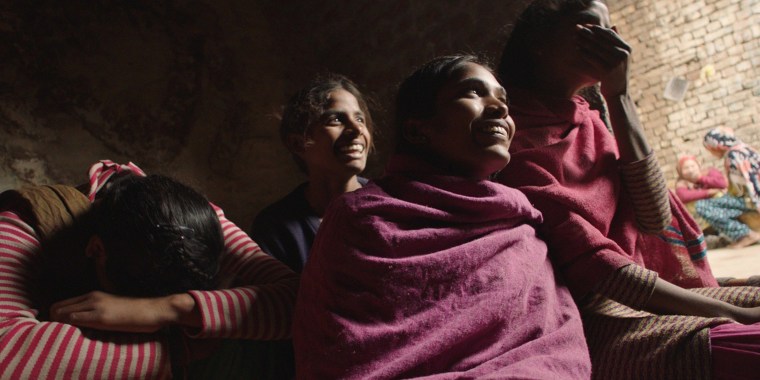
In the documentary “Period. End of Sentence.”, women in India tell of the stigma, shame and lack of access to sanitary protection they must confront every month.Netflix

 / Source: TODAY
By Marguerite Ward

For too many young women around the world, “period shame” — the fear that women are impure when they are menstruating — prevents them from going to school, praying in public places or other parts of daily life.

In the documentary “Period. End of Sentence.,” women in India tell of the stigma, shame and lack of access to sanitary protection they must confront every month. Co-produced by a former high school student and her teacher, the film took home the prize for best documentary short at the Feb. 24, 2019, Academy Awards.

“I studied until I reached middle school, but when I started having periods, it became really challenging,” says one young woman featured in the documentary. “When I got my period, it was very tough for me to change clothes. I had to go somewhere far off.”

Looks and comments she’d get from men made her feel ashamed, and taking time to find secret spots to change became too difficult. She became one of scores of women to drop out of school because of their periods.

Many women in India use old cloths for sanitary protection, often reusing them. And an estimated 88 percent of women in India sometimes resort to using ashes, newspapers, dried leaves and husk sand to aid absorption, according to a 2015 study on menstruation myths.

In some areas, some believe that women are impure when they are menstruating. In addition, many women don't have access to, or cannot afford, sanitary napkins.
In some areas, some believe that women are impure when they are menstruating. In addition, many women don’t have access to, or cannot afford, sanitary napkins.Netflix

In 2006, an Indian engineer named Arunachalam Muruganathamwon a national award for designing what’s known as “the pad machine,” which a few people can manually operate, and using sustainable products, create pads.

When Oakland High School English professor Melissa Berton and her then-student Helen Yenser found out about this while attending a U.N. conference, they decided they had to do something.

“It is such a taboo topic, and in the United States as well,” Melissa Berton, producer and English teacher told TODAY.

The two and a group of other high school students formed The Pad Project, partnering with an nonprofit organization called, Action India. Through bake sales, Kickstarter and “yogathons,” they raised enough money to purchase a pad machine ($12,000) and produce a documentary.

For some women, access to a "pad machine" means the ability to return to school or make a living.
For some women, access to a “pad machine” means the ability to return to school or make a living. Netflix

“Once we began to talk about it, the response has just been phenomenal, with just everybody all along saying, ‘What can we do to help?’” Berton said.

The Pad Project works to raise money for more pad machines and one year’s worth of supplies. After that, the profits made from selling pads sustains a microeconomy, employing residents and helping women in the area.

Yenser and Berton co-produced the Netflix documentary with Lisa Taback and Garrett Schiff. It was directed by 25-year-old Rayka Zehtabchi.

“I think when I went there and was face to face with the women and talking to them in detail about their experience and building their relationships with them, it became really clear to me that it was a really big source of shame,” said Zehtabchi. “It’s held so many of the women back, for so long.”

“The women were really hungry for this type of machine and to be able to start their own business,” the director said.

Yenser is now a graduate school at University of Southern California. But for her, the project’s impact is just beginning — with people reaching out from areas in Pakistan, Rajasthan, Nepal and beyond.

“Now that the documentary is on Netflix, I actually get an email about every five minutes from someone in a different country either asking for a pad machine in their village or a village they know of,” Yenser said.

Some Good Points from Kidspot.com

Early menstruation and what it means for your daughter


It may seem early, but it’s quite normal and common for girls to start their period as young as eight or nine. For a girl this young, it can be an emotionally and mentally difficult thing. There are many ways you can help your daughter if is she has an early first period.

Early menstruation and what it means for your daughter

Why have her periods started early?

The main reason your daughters periods have started earlier than the average is because the hormones in her body that start puberty have started being produced earlier. In the vast majority of cases, there is no obvious reason for why the body has started producing these hormones early. Early menstruation can be related to body weight (usually a period won’t begin until a girl is over 40kg), hereditary factors and ethnicity. If the onset of puberty is very early (breasts develop before 8 and periods start before 9) you should take your daughter to be checked by your GP to rule out any rare or serious brain problems.

How can I help her?

  • If your daughter is going through puberty earlier than her friends and school mates, she’ll probably be feeling a bit lonely and like she’s ‘the odd one out’.
  • If her period has started early then it’s likely she’ll be taller and developing breasts before her friends. This can make her feel self-conscious and a little embarrassed.
  • Unfortunately, being more ‘developed’ can often be a source of ridicule among kids.
  • The best thing you can do as her mum is reassure her and explain exactly what is happening to her.
  • Make sure you listen to her concerns and help her devise ways to deal with any negative reactions she has from other kids.
  • It’s important to boost your daughter’s self-esteem by reminding her of her good points.

Being prepared

Ensure that your daughter knows how to use feminine hygiene products (such as pads) correctly and that she has supply in her school bag. It’s a good idea to make sure her school is equipped with somewhere for her to discreetly dispose of used pads or tampons. This will make her feel more confident.

Is she a child or a teenager?

While she may start to look and act like a moody teenager, remember she’s still just a child. Just because she appears older it’s important to remember that mentally, she’s still just as young as her friends and may not be as capable or responsible as she looks.

This article was written for Kidspot by Corinne Draper. Sources include HealthInsite.

Also from A Mighty Girl

That Time Of The Month: Teaching Your Mighty Girl About Her Menstrual Cycle

Do you remember having your period for the first time? Were you relieved, scared, or confused? Did you know what was happening, or were you told after the fact? Did you think you could bleed to death, or believe that you couldn’t swim or go to gym class? Did you hear someone make joking references to women being “on the rag” and think, “I’ll die of embarrassment if anyone knows?” Did you feel like you were prepared?

In a world that is increasingly public about all sorts of previously private topics, menstruation is often still a taboo subject. What information girls do hear around them is often negative or incorrect, and even school health classes that discuss the subject often focus on the “nuts and bolts” without ever touching on the real, practical experience of a monthly cycle. As a result menarche — a girl’s first period — is still likely to be disconcerting for her.

But parents, mentors, and friends of Mighty Girls can turn this milestone of womanhood into a much more positive experience. By providing lots of accurate information, real-life experience, and practical advice, girls can learn to view their menstrual cycle in a totally different way: as an important element of their female nature and as a key sign of coming adulthood. In this blog post, we’ll help you turn a girl’s first period into an empowering experience.

If you’re looking for more great material for teaching the Mighty Girls in your life about their bodies, make sure to check out our blogs Body Smart, Body Safe: Talking with Young Children about their Bodies and A Time of Change: Talking With Tweens and Teens About Their Bodies, as well as our Guides for Girls section which provides resources for Mighty Girls on all aspects of their physical and emotional developments.

Read All About It: Books About Menarche

One of the reasons menstruation can seem so strange is that we just don’t talk about it. Think of how many TV shows, movies, and books that feature characters in their tween and teen years never address the experience. Fortunately, there are some good books out there your Mighty Girl can read — or better yet, that you can read together — to introduce the idea that this is something that happens to every girl.

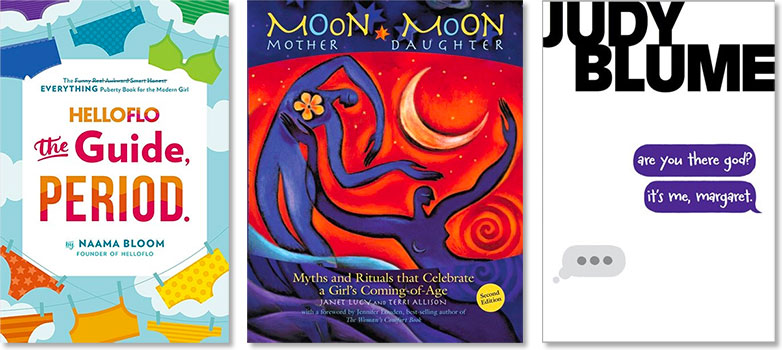
Are You There, God? It’s Me, Margaret

Written by: Judy Blume
Recommended Age: 9 – 13

In Are You There, God?, Judy Blume frankly addresses a common concern for tween girls: wondering if that first period is ever going to happen. Margaret is only 12, but it seems like all of her friends are maturing faster than she is. Fortunately, coming to peace with puberty — and how it happens on its own time — is easier when you know you’re not the only one waiting, which makes this book particularly valuable for tweens.

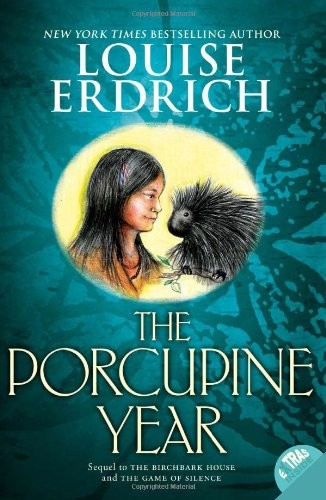
The Porcupine Year

Written by: Louise Erdrich
Illustrated by: Louise Erdrich
Recommended Age: 9 – 14

Omakayas is an Objibwe girl in 1852 whose family has been displaced and needs to find a new home. Amidst the difficulties of finding a new place to live and a place in a new community, Omakayas is also faced with menstruation, a key transition into adulthood for her culture. However, with warm, loving guidance from Nokomis, her grandmother, Omakayas is left feeling confident and ready to take this big new step into adult life. Omakayas’ story may take place in a very different place and time, but her feeling of being caught somewhere between childhood and adulthood is sure to resonate with girls of today.

To read Omakayas’ full story, check out the first two volumes of the series, The Birchbark House and The Game of Silence.

Just As Long As We’re Together

Written by: Judy Blume
Recommended Age: 12 and up

This book, also by Judy Blume, features a main character going through lots of turmoil — moving, starting middle school, parents who are separating — when her first period gets added to the mix. But to Stephanie’s surprise, her first period isn’t just a physical change: along with it come changing feelings about boys, friendships, and herself. This book will help girls understand that these emotional changes, just like their physical changes, are a natural part of nearing adulthood.

How It All Works: Learning About The Menstrual Cycle

Another way to make girls more comfortable with menstruation is to make sure that they have accurate information, not just about how and why it works, but also on the day-to-day, real life business of managing hygiene. The more informed she is, the more comfortable she will be with how to handle both menarche and her ongoing experience.

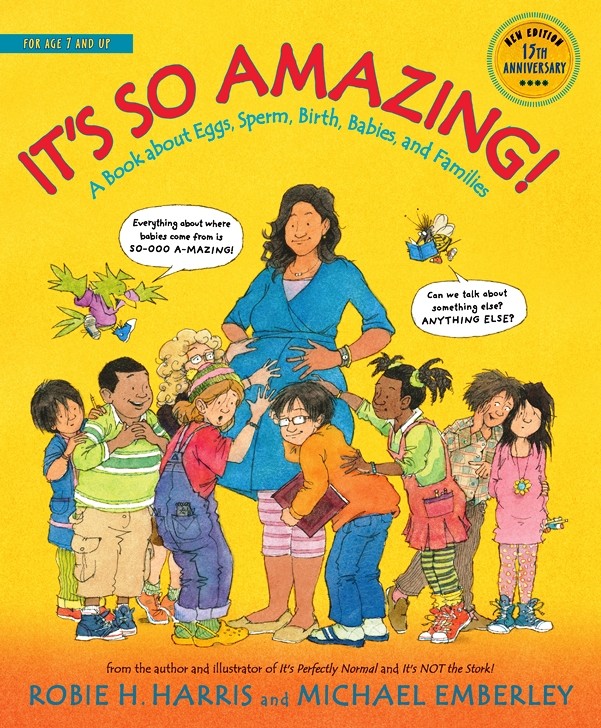
It’s So Amazing: A Book About Eggs, Sperm, Birth, Babies, and Families

Written by: Robie H. Harris
Illustrated by: Michael Emberley
Recommended Age: 7 – 10

Girls are starting their periods younger — sometimes as young as 9 or 10 — so it’s a good idea to introduce the idea of menstruation to girls sooner than you might expect. It’s So Amazing is about general sexuality education, but includes a discussion of the menstrual cycle and its role in a woman’s body. If you want to introduce this idea early — and especially if your daughter seems to be an early developer — this is a great book to start talking more seriously about the changes that come with puberty. Author Robie H. Harris and illustrator Michael Emberley have collaborated on three books about sexuality education; in addition to this one, parents can check out the introductory-oriented It’s NOT The Stork! for ages 4 to 8 and the more advanced It’s Perfectly Normal! for age 10 and up.

Period: A Girl’s Guide

Recommended Age: 9 – 13

This pocket guide by JoAnn Loulan and Bonnie Worthen is an great look at everything to do with menstruation. It answers the basic questions of how things work, as well as practical questions like how to decide between pads and tampons; how to handle period-related issues like cramps, PMS, and even how to remove accidental stains; and what happens during a pelvic exam. A calendar at the back will also get her started charting her cycle, so that she can start figuring out what’s typical for her in terms of cycle length, period length, and heaviness of flow.

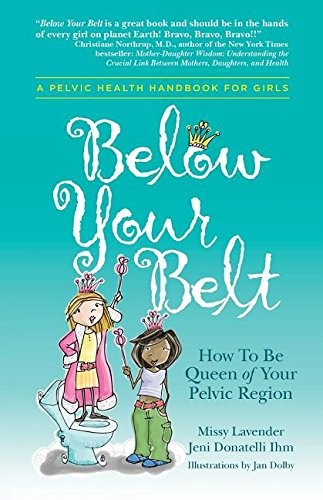
Below Your Belt: How To Be Queen of Your Pelvic Region

Illustrated by: Jan Dolby
Recommended Age: 9 – 14

Of course, reproductive health is about more than just ovulation and periods. In fact, while we don’t talk about it much, the whole pelvic region has a remarkable effect on health and well-being. In this new book from the Women’s Health Foundation, girls will learn the whole picture of pelvic health, from good urinary and bowel habits to strengthening pelvic muscles to tracking and managing periods. This unique book is sure to be well-used.

Parents looking for book about pelvic health for younger children can check out the Foundation’s picture book Riding the Potty Train: Better Bathroom Behavior for Little Girls on The Go!.

The Care and Keeping of You 2: The Body Book for Older Girls

Written by: Cara Natterson
Illustrated by: Josee Masse
Recommended Age: 10 – 13

This much beloved guide includes general information about growth and development, as well as specific period-related questions like what to do about menstrual cramps and how to use a tampon correctly. Girls who understand the basics of puberty but want more information will find this book accessible and reassuring, and it’s also an excellent option for parents who want a book focusing strictly on anatomy and hygiene, without a discussion of sexuality and intercourse. Parents of younger tweens should also check out the first volume, The Care and Keeping of You 1, which covers similar information with slightly less detail for ages 8 to 12.

Bunk 9’s Guide to Growing Up: Secrets, Tips, and Expert Advice on the Good, the Bad, and the Awkward

Written by: Adah Nuchi
Illustrated by: Meg Hunt
Recommended Age: 10 – 13

This puberty book takes an unusual tone by using the voices of nine fictionalized girls to pass on accurate, girl-friendly information about growing up! The girls of Bunk 9 are ready to answer all your questions about puberty — from what changes you’ll notice in your body to how to manage mood swings to details about health and hygience that every girl should know. The accessible framework and friendly voices make this a book girls will be eager to read, and the information is all pediatrician-approved!

HelloFlo: The Guide. Period.

Written by: Naama Bloom
Recommended Age: 10 and up

Honest, funny, and unafraid of the messy, real-life facts about a girl’s changing body, this is definitely not your mother’s puberty book. HelloFlo founder Naama Bloom’s mission is to create informed, empowered young women who are unafraid to ask questions and make the best choices for themselves and their bodies. A celebration of women’s bodies and all the confusing, uncomfortable, silly, transformative, and powerful changes that occur during puberty. This full-color book features bright, diverse, approachable illustrations and infographics (on everything from how to insert a tampon to a timeline of body hair trends throughout history), doctor-vetted information, and personal testimonials from real girls and women.

Cycle Savvy: The Smart Teen’s Guide to the Mysteries of Her Body

Written by: Toni Weschler
Recommended Age: 14 and up

Older girls may be getting used to their menstrual cycle, but that doesn’t mean they can’t benefit from further information. Cycle Savvy goes into much more detail about female reproductive anatomy, general gynecological health, and physical and emotional changes during the menstrual cycle. Author Toni Weschler also advocates charting your cycle, not just so that a girl knows when to expect her next period, but also so that she is in tune with her fertility and reproductive health, and therefore more alert to changes that could signal a health issue. After reading this book, girls will be confident that they understand just how their menstrual cycle works.

Be Prepared: Ready For Menarche

If you ask women about the most disconcerting thing that happened in their early years menstruating, most of them will describe a time that their period started and they weren’t ready: they didn’t have the supplies they needed to hand, and didn’t know how to get them. By providing your Mighty Girl with a kit of supplies, she’ll be ready when the time comes!

Dot Girl First Period Kit

Recommended Age: 9 and up

This handy kit from Dot Girl includes a book of 20 common questions, as well as pads, disposal bags, hand wipes, and a reusable heating pad, all of which pack away in a carrying case that fits in a purse or a backpack. The pack also includes a period diary to help her track her first year of cycles. This kit assumes some degree of knowledge — it’s not for teaching her all about menstruation, but for reminding her of key points — but the included supplies will make sure that she doesn’t get caught without the products she needs.

Heart Felt Reusable Bamboo Menstrual Pads

Manufacturer: Heart Felt
Recommended Age: 9 and up

There are so many more menstrual product options out there for today’s girls! If your Mighty Girl is bothered by the materials in disposable menstrual pads, or if she wants to be more environmentally conscious (and save a little money along the way), why not try washable, reusable pads? These bamboo pads by Heart Felt are comfortable and easy to clean, with a charcoal layer that is super absorbent. This 5-pack of pads will give her the chance to try out washable pads and see if they’re right for her.

LENA Menstrual Cup

Manufacturer: LENA
Recommended Age: 10 and up

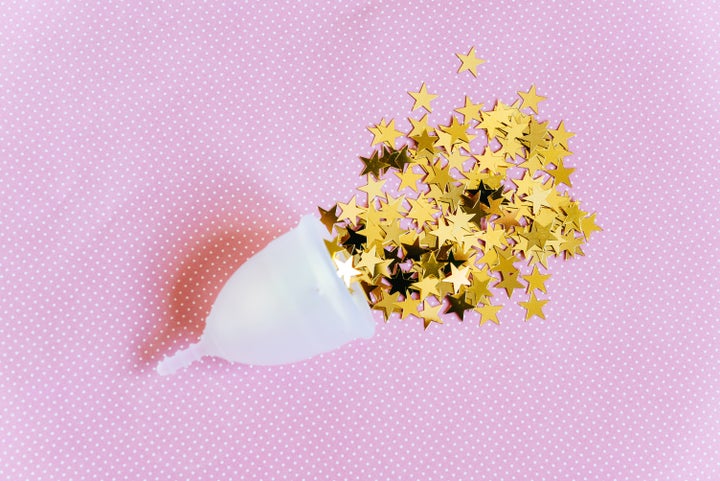
Another option now available for girls and women are menstrual cups; these insertable soft cups can be used for up to 12 hours at a time without leaking. This menstrual cup from LENA is made in California from 100% medical grade silicone and is registered with the FDA. It’s available in two sizes: the small size is best for first-time users and girls and women with a light flow, while the larger size is best for older teens and women or those with a heavy flow. While using a menstrual cup takes some practice, girls will love being able to do whatever they want — dance, run, even swim! — for a full day without worrying about their menstrual product.

The Emotional Side

Of course, even if she is totally prepared in every way for her first period, a girl at this age has a lot of emotions that she needs to express: about her developing body, her complex moods, and her changing place in the world. Many girls this age find it helpful to keep a journal or diary where they can freely explore these feelings in a safe space. Blank journals are great, but sometimes it’s helpful to have a guided journal with writing prompts and other material to help her sort out her complicated thoughts.

The Care and Keeping of You Journal 2

Manufacturer: American Girl
Recommended Age: 10 and up

The partner to the American Girl Library book The Care and Keeping of You 2: The Body Book for Older Girls is an excellent way to help girls manage their feelings about how their body — and life — is changing. In addition to including tips, quizzes, writing prompts, and checklists, it also includes designated space for tracking their periods. The guidance this journal offers will give her a great way to understand her whole body better — when she enjoys exercising most, what foods she needs more of, and what makes her feel most comfortable in her own skin. For a similar journal for slightly younger girls, check out The Care and Keeping of You Journal 1 which is suitable for girls aged 8 to 12.

The Feelings Book Journal

Written by: Dr. Lynda Madison
Illustrated by: Josee Masse
Recommended Age: 8 – 12

This journal is a companion to The Feelings Book, American Girl Library’s excellent guide to understanding and managing emotions. This journal focuses solely on the fluctuating emotions of a girl this age, something that can be particularly challenging if she finds that the hormones involved in her cycle have a large impact on her mood. Quizzes, fill-in-the-blanks, and checklists let her identify and work through her complicated thoughts — because sometimes, understanding what she’s feeling is the hardest part.

Just Between Us: A No-Stress, No-Rules Journal for Girls and Their Moms

Manufacturer: Chronicle Books
Recommended Age: 8 and up

Journaling between mother and daughter can be a great way for girls — and moms — to talk about some of the changes in puberty that make them uncomfortable. Mother and daughter authors Meredith and Sofie Jacobs have created a joint journal that moms and daughters can use to write out conversations that might be awkward spoken aloud. The writing prompts cover much more than general development, including topics like friends, school, and dreams for the future. But when the emotions of puberty get hard to handle, girls can use this journal to help find out more about their mother’s own journey — and what she can learn from it for her own.

The Care and Keeping of Us: A Sharing Collection for Girls and Their Moms

Recommended Age: 8 – 12

When life is changing fast, it’s important to stay close with the people in your life — but some of the conversations can seem difficult face-to-face. And, of course, first you have to know what to say! This collection for moms and daughters will help with both of those issues. The set includes twin books for moms and daughters, each of which contains prompts, how-to-say-it scripts, and more to get the conversation started, as well as a shared journal with two bookmarks for writing down jokes, thoughts, to-do lists, and questions. This newly released set is sure to be a hit.

Celebrating Womanhood

Of course, there’s another special way that mothers — as well as all the other people in a girl’s life — can be a part of menarche: by celebrating it! Many cultures have a variety of rites and celebrations for a girl’s first period, and marking the occasion in some way is a great way to welcome her into womanhood and make her feel like her cycle is a special part of her.

Moon Mother, Moon Daughter

For thousands of years, cultures have welcomed the arrival of a girl’s first period as a key signifier of adulthood, but in today’s culture we’ve lost the sense of the significance of menarche. Janet Lucy and Terri Allison encourage mothers to use myths and rituals that use the moon as a symbol to welcome girls into the community of womanhood. By encouraging mothers and daughters to form new connections as the daughter matures, Moon Mother, Moon Daughter is a celebration of female gifts and generational wisdom.

105 Ways to Celebrate Menstruation

Written by: Kami McBride

Menarche only happens once, but most women will have hundreds of periods before their cycle stops during menopause — why not find ways to celebrate each one of them? 105 Ways to Celebrate Menstruation was written to help women understand their own cycle — and their daughters’ — in a new light. The tone is one of honor and respect for a woman’s body, making it perfect for helping girls find balance in their new skin. Some of the suggested rituals are more suited to adults than teens, but even the ideas that you don’t want to use are sure to inspire other ways that you can celebrate her female nature.

If menstruation wasn’t something you discussed in your home, this can all feel a bit strange at first. But by making it an open topic for your Mighty Girl — something matter-of-fact, not mysterious, and maybe even a bit special — she will feel a new confidence about this very important transition.

Additional Recommened Recommendations

From A Mighty Girl

For many, menstruation is still a taboo subject and, as such, very few TV programs or films, even those about tween and teen girls, ever discuss periods. One of the best TV moments depicting a family lovingly responding to a girl’s first period comes from a 1989 episode of the long-running series Roseanne. In it, sports-loving Darlene has her first period and starts throwing away all of her athletic equipment, thinking that her sports days are over until her mom intervenes:

Roseanne: Oh, I get it! You think you have to leave this stuff behind you now. Like women have to give up baseball gloves and start wearing aprons and stuff.

Darlene: All I know is I’m not going to start shaving my legs or wearing pantyhose like Becky!

Roseanne: You think I make Becky put on makeup and wear perfume? No, she does it because she’s always liked that kind of stuff. That’s the kind of woman she wants to be.

Darlene: Well, that’s not the kind of woman I want to be!

Roseanne: Well then what are you throwing all your stuff away for then? These are a girl’s things, Darlene, as long as a girl uses them.

To watch a 10-minute clip from the episode on YouTube, visit http://tinyurl.com/kgzktfm

For many girls, what little they hear about menstruation is frequently negative or incorrect, and even school health classes that discuss the subject often focus on the “nuts and bolts” without ever touching on the real, practical experience of a monthly cycle. But parents, mentors, and friends of Mighty Girls can turn this milestone of womanhood into a much more positive experience.

In our blog post, ” Teaching Your Mighty Girl About Her Menstrual Cycle,” we recommend a number of excellent books to help girls understand how menstruation works as well as how to manage the physical and emotional changes that come with it.

These recommendations include books geared toward helping prepare girls who are still a year or two away from menarche as well ones that offer teens a more detailed understanding of how their cycles and bodies work. The post also highlights several period supply kits that are helpful to have on hand so your Mighty Girl will feel prepared for when the time comes.

To read our post on “Teaching Your Mighty Girl About Her Menstrual Cycle,” visit http://www.amightygirl.com/blog/?p=3281

For more great resources to help tween and teen girls understand the physical and emotional changes during puberty, visit our post “Talking with Tweens and Teens about their Bodies” at http://www.amightygirl.com/blog/?p=2229

And, for those with younger Mighty Girls in preschool and early elementary school, we recommend resources on how to teach them about their bodies in our post at http://www.amightygirl.com/blog/?p=2006

What’s Your Opinion On A Period Emoji?

I’m wondering why there shouldn’t be one?

A period emoji is coming – and it’s a really big deal

 Marie Claire Dorking,Yahoo Style UK Thu, Feb 7 5:18 AM EST

Why Is A Period Scene In A Movie So Shocking?

Mary Queen of Scots’ period blood is not only normal, it’s integral to her story

As the film shows, all eyes at court would have been trained on whether she was going to produce an heir.

In Josie Rourke’s glorious Mary Queen of Scots film, one scene is supposedly wildly shocking. It’s not the harrowing segment that portrays a savage, gory murder – nor one of the grisly battle shots. Instead, it is a quiet, candlelit moment in Mary’s bedchamber when, with her marmalade hair loose to her waist and clad in a creamy nightgown, she is washed by her giggly coven of gentlewomen. One of them remarks that she’s early getting her period, and a bit of blood splashes into a bowl. So. Not quite one for the smelling salts. It is about as shocking as a Calippo.

Yet, as is de rigueur when the conversation turns to lady things (because talking about this stuff without employing euphemism is punishable by death), some people have been working valiantly hard to be scandalised. While promoting the film, Rourke has been treated to questions about how difficult it was to shoot the scene. (A fair enquiry. Come on, it must be nail-bitingly tricky to capture Saoirse Ronan – who plays Mary and who is, let’s face it, quite good at acting ­– standing in her bedroom accompanied by minimal other cast members.) The BBC also published a news story with the (now edited) headline “Mary Queen of Scots director Josie Rourke defends menstrual blood scene.” This was confusing. Perhaps they meant to replace the words “menstrual blood” with “real life kitten execution”? As Rourke tweeted, the scene “requires no defence”.

Of course it doesn’t. Aside from being a so-normal-as-to-be-boring part of life for half of the population, depicting Mary’s fertility makes perfect sense in a film whose storyline hinges on the continuation of dynasties. After all, royal bodies weren’t (and still aren’t) just personal: the queen’s cycle was of colossal political importance, too. All eyes at court – and at courts across the land – would have been trained on whether she was going to produce an heir. In the movie, Elizabeth I, Mary’s presumed rival, wonders about it. And there is so much chatter about it in the Scottish court that Mary has to host a kind of flower-laden medieval baby shower to stop tongues wagging. To not include Mary’s period would have been like omitting the apples in a film about fruit bowls. It is central to the story, and therefore it should be seen.

Granted, most women’s periods don’t carry the political significance of Mary’s – but this is nevertheless a lesson that applies to films and TV in general. Periods are a key thread in the fabric of women’s lives, yet the scaredy-cat screen world doggedly refuses to reflect this. Portrayals that ring true (Girls showing Jessa realising she’s bleeding in the middle of a make-out session) are far outweighed by negative, brain-dead ones (side eyes to Carrie’s stigma-cementing depiction). Both of these categories are, of course, trumped by the number of times periods aren’t mentioned at all: the lengthy memory-jogging Googling required to come up with the examples in the previous sentence is testament to this point.

The squeamishness of the screen world no doubt mirrors society’s attitudes as a whole. Until Bodyform’s #bloodnormal advert in 2017, advertising for period products was profoundly bonkers, with menstruating women displaying a baffling fondness for standing in fields, smiling, and blue gunk deemed a logical stand in for blood. Meanwhile, the shame around periods – along with a hefty dose of poverty – means girls in the UK are missing school because they cannot afford sanitary towels. And last month, I fell over in a branch of Sainsbury’s after diving compulsively to retrieve a tampon that had fallen out of my bag, lest it burn out the eyes of an innocent passer-by.

Preparing Your Child For Sleepaway Camp

Sleepaway Camp encourages kids to move outside their comfort zone, try new things, and master ski…

Learn how to prepare your child for Sleepaway Camp!

Sponsored by YMCA

Above all, Mary Queen of Scots excels at showing how women’s bodies are so often weaponised against them. Mary’s physicality – her sexuality, her fertility – is wrapped up in her femininity, and this is what ultimately bites her on the bum in the man’s world of the 16th century court. Depressingly, this resonates today, in a landscape where women are still undermined by references to their appearances – and putting a period on screen can spark such a fuss. Happily, though, the film subverts stigma just as much as it exposes it. Its depiction of female bodies may not be shocking – but its normalising stance might just jolt us into altering our reaction towards them.

Gwen Smith is a freelance arts journalist, and was formerly a feature writer for the Mail on Sunday’s culture supplement, Event.

Opinions please….What’s your take on a Period Party?

Personally, the word mortified comes to mind…


Comedian Bert Kreischer shared an entertaining story while appearing on “Conan” in August 2018. The topic: His daughter’s “period party.”

When Kreischer’s younger daughter first started her period, she asked him to pick up some supplies for a period party. She responded to his initial confusion by noting that “all the girls are throwing them” and instructed him to buy red velvet cake and icing to decorate it with the “name” of her period.

The dad quickly got on board.

“I had the best time of my life! I got beet juice, pomegranate juice, pasta with marinara sauce, ketchup and fries, red velvet cake, red wine!” he told the “Conan” audience. “It was awesome. I hope to God you hear it in a positive manner, and you fathers get to throw your daughter a period party.”

While “Flo” is obviously a popular pick for a period “name,” Kreischer proudly noted that his daughter chose “Jason” because the date of her menarche was Friday the 13th.

Although the idea of a “period party” may seem strange, Kreischer actually touched on something that’s not so uncommon: Many parents and their daughters celebrate this milestone in festive ways.

While some people just like to take advantage of any occasion to throw a theme party, there are generally more profound motivations behind period parties.

For many, this kind of celebration is a way to destigmatize and minimize the sense of shame around periods ― a topic that’s still considered embarrassing or taboo to talk about. Period parties also present the opportunity to address some of the fear, uncertainty and confusion young people feel around menstruation.

In January 2017, a Florida mom’s “period party” for her daughter went viral on Twitter. Twelve-year-old Brooke Lee’s mother Shelly organized the event to ease the preteen’s anxiety around starting her period.

She invited close friends and family, and they celebrated with pizza, a cake with red and white icing and menstrual product gifts.

View image on TwitterView image on TwitterView image on Twitter

Autumn Ayala@autumn1shea

Brooke started her period today & my family is super extra 😂😩

7,172 people are talking about this

Poet Dominique Christina described a period party she threw for her 13-year-old daughter while introducing her powerful piece, “The Period Poem,” at a spoken word event in 2014.

“And so then my daughter, she starts her period, and she’s stricken and walks out the bathroom looking like she’s died or something. And I wanted to undermine that,” Christina said. “So I threw her a period party, my homies rolled up, dressed in red, and there was red food and red drinks. It was great. All red everything.”

Some people refer to this kind of event as a “first moon party” or “red tent party,”which appears to be a reference to Anita Diamant’s The Red Tent. (The book follows the biblical character Dinah, a daughter of Jacob and sister of Joseph, and its title refers to her tribe’s tradition of women menstruating together in a special tent.)

For some people, the concept of a period party may sound a bit embarrassing and over the top, but menstruation-related celebrations are relatively common in certain cultures.

In Tamil communities, there’s a special coming-of-age ceremony and party to mark the occasion. The Navajo have a ritual called KinaaldaMany Japanese families historically made a nod to a daughter’s first period by serving sekihan, a dish associated with special occasions that features rice and adzuki beans (which have a reddish color).

Needless to say, the period party concept isn’t particularly new, but the modern, American, red velvet cake version seems to be catching on in our social media-driven world. Pinterest is full of period party ideas. The Instagram hashtag #periodparty brings up photos of menstruation-themed desserts and other festive fares. The parenting website Mommyish even offers a guide called “First Period Party Ideas Your Daughter Will Hate You For.”

Pinterest is full of food and decor ideas for a "first moon party" or "rent tent party."

Pinterest is full of food and decor ideas for a “first moon party” or “rent tent party.”

This concept also has a history in pop culture. When the character Rudy Huxtable started her period in a 1990 episode of “The Cosby Show,” matriarch Clair wanted to honor the occasion with a special “Woman’s Day.”

Supermodel Tyra Banks’ mother, Carolyn London, threw her teenage daughter period party, which the two women described in their book, Perfect is Boring.

“One day, I was watching a National Geographic special and saw that in almost every primitive culture, there was a rite of passage ceremony where the women would come together to honor a girl who had just started her period and teach her all about it,” London wrote. “It was a celebration of womanhood, and an acknowledgement of passing into another realm.”

Inspired by this concept, the mom decided to host a party for Tyra. She invited her daughter’s friends, ordered a cake that said “You’re a Woman Now,” decorated the house in Tyra’s favorite color yellow, and put together a menstruation gift basket. During the party, London “gave them all the complete breakdown” of menstrual products, hygiene, anatomy and more. The party was reportedly such a hit, she threw similar events for her nieces as well.

“I appreciate that my mother never wanted me to be ashamed of anything, or to think that there was something bad or dirty about my body,” Banks wrote.

The event Banks described had a clear educational spin, which many contemporary period parties do as well. Organizations like Bloody Good Period and The Cup Effect have hosted charity-oriented period parties aimed at raising awareness and money to support women in need of menstrual supplies and other support.

Period parties can also have an educational or charitable spin. 

Period parties can also have an educational or charitable spin. 

Members of the HuffPost Parents community shared their experiences with period celebrations in response to a callout earlier this month. Many said they commemorated the occasion with a special meal, a mother-daughter shopping trip, a small gift or even an outing to get their ears pierced. Others put together menstruation-themed goodie bags with items like tampons, pads, chocolate, cramp-relief medicine, heating pads, soap, slippers, and more. Still others went the full-on party route.

“We had a small celebration. I got her red balloons and red velvet cupcakes. I also got a number 1 candle for her to blow out to commemorate the occasion,” Michele Lorenc Hufnal wrote. “I feel like when I was growing up everything was borderline shameful. I certainly didn’t want my daughter to feel that way. I think that by having a small celebration I was able to take some of the dread she was feeling and turned it into a more lighthearted day. P.S. She loved it. You don’t have to. No one has to. But I chose to lighten the mood.”

Another mother created a ceremony for her daughter to honor the occasion and show her how many women in her life could offer support and answer any questions about the changes in her body. Kate Nagel explained that she gathered female relatives and close friends (approved by her daughter) and asked each one to bring a single flower to create a full bouquet, “an item that represented what it meant to them to become a woman,” and a memory they’d feel comfortable sharing.

“I wanted her to know that she came from a long line of strong women and that she was not alone in and on her journey,” Nagel wrote. “I grew up during a time that women were made to hide, be ashamed and want to stop their menstrual cycle. I wanted her to celebrate the power she had by being a woman, by being able to bear a child and that this was a powerful time of manifestation in a 28/30 day cycle.”

Members of the HuffPost Parents community shared their opinions and experiences when it comes to period parties. 

Members of the HuffPost Parents community shared their opinions and experiences when it comes to period parties. 

Not all HuffPost Parents community members were on board with the concept of putting on a period party, however.

In the most-liked comment responding to the callout, Nikki Bull Pollard wrote, “Its [sic] bad enough I have to make a damn elf appear magical for the whole month of December. Now I gotta throw a period party? Up yours, Overachiever Mommies. Up. Yours.”

In the second-ranked comment, mom Tawnya Slater joked, “I have only boys…. do I need to plan a ‘first nocturnal ejaculation’ party? What do you serve at that party? Squirt?”

Still, another commenter offered a very diplomatic approach.

“In general, I think any celebration, ceremony, or loving acknowledgment of first menses as a rite of passage is wonderful and should be more widely practiced,” Amber Harris wrote. “I say in general, because often well-meaning people (and let’s be honest, sometimes they are mean people and think embarrassing other folks, especially their children, is fun and funny) forget to include their daughters in the planning and execution of the celebration and end up making the experience more embarrassing and scarring than sacred, welcoming or special.”

Harris concluded that as long as the young person being honored wants to have this kind of celebration and has agency in the planning process, it’s a fine idea. And even if the child doesn’t want to have a special event, it can be helpful to have an empowering conversation about menstruation and growing up.

Ultimately, however you feel about period parties, there’s no denying they are … memorable. Period.

Deliveroos for feminine products?

On a continent which has often neglected women’s health, Rwanda is making waves. Almost half of married women in the country use contraception, a dramatic increase since the millennium when this figure was just six per cent.

But challenges persist and Kasha, a ‘femtech’ start-up, has developed what amounts to a Deliveroo for women’s health to overcome embarrassment in the East African country.

“Around the world women are not going to clinics – it’s such a big deal to go in and ask for things like contraceptives and menstrual products,” Joanna Bichsel, CEO and co-founder of Kasha, told The Telegraph. “We want to change the way women, especially in developing countries, are able to access health products.”

Established only two and a half years ago in Rwanda, the company has recently launched in Kenya. It allows thousands of women to order affordably priced products – from sanitary pads and condoms to shampoos and body lotions – on their mobile devices

Customers can order online, or those without smartphones can dial *119 to use an offline, text message based version to make purchases. The orders are then dispatched and delivered to their door in discreet packaging by moped or, in particularly remote regions, a local Kasha ‘agent’.

“There was absolutely a gap in technology serving women and women’s needs,” said Ms Bichsel, who started the company with business partner Amanda Arch after leaving the Seattle tech bubble.

“We have an e-commerce model, but we have chosen to optimise for women and underserved consumers.”

The approach appears to be working; Kasha delivered its 100,000th order this month and has close to 20,000 customers. Products which are seen as ’embarrassing’ to purchase in shops – including sanitary pads, condoms, HIV tests and emergency contraception – have been the most popular purchases.

“We serve women across segments, from low income women in rural communities to executive women in offices,” said Dianne Dusaidi, Rwanda country director. “We’ve actually been surprised with how popular we’ve been with rural areas, we thought Kasha might just appeal to the middle classes.”

Central to the company’s appeal is what it calls the “Kasha ladies”. Built on an Avon-style model, the company employs 75 women who work in predominantly rural communities, to build trust with clients and explain how e-commerce – still in its infancy in Rwanda – works.

“The majority of our agents are widows, single mothers or breadwinners,” said Malyse Uwase, regional health and impact manager. “We look for women who are motivated and trusted in their community, who can talk through products and help people through the ordering process. They’re the face of Kasha.”

Kasha received funding from the UK’s Department of International Development (DfID) and Unilever’s Transform programme to get started, but hopes to be profitable and self sufficient by early 2020 – and to expand across the developing world.

“Kasha was built to be global,” said Ms Bichsel. “More people should be watching the ‘femtech’ space, it has the potential to revolutionise women’s health.”